REVIEW · LIMA
15-Day Great Inca Expedition
Book on Viator →Operated by VIPAC Travel · Bookable on Viator
Zero guesswork in Peru? Yep.
This route strings together Lima, Nasca-Paracas, Arequipa, Colca Canyon, Lake Titicaca, Cusco, the Sacred Valley, and Machu Picchu in one organized run, so you spend less time figuring out how to get places. I also like the small-group size (up to 12) and the fact that you’re not just riding—your days are built around key stops with bilingual Spanish/English guidance.
The trade-off? The Machu Picchu entry ticket is not refundable, and date changes or amendments aren’t accepted, so you’ll want to protect your timing.
In This Review
- Key things I’d zero in on
- First-Day Lima: Plaza Mayor, Larco Museum, and the Pizarro Crypt
- Nasca Lines From the Air, then Paracas by Boat: Candelabro and Penguins
- Arequipa’s White City With Volcano Views and Santa Catalina’s Walls
- Colca Canyon by Land: Patapampa at 4,900 m and a Condor Sunrise
- Lake Titicaca: Uros Floating Islands to Taquile’s Music and Traditions
- The Cusco Road Trip: La Raya Pass (4,335 m), Pucará, Racchi, and Andahuaylillas
- Cusco in One Shot: Sacsayhuaman, Qorikancha, Markets, and Cathedral
- Sacred Valley Day: Pisac, Weaving and Chicha, Moray, and Maras Salt Mines
- Train to Machu Picchu: Timed Entry, Bus Climb, and Visitor Circuits
- Cusco After Machu Picchu: A Free Day for Rainbow Mountain or Huaypo Lake Kayak
- Wrapping Up in Lima: One Last City Window
- Price and Logistics: What $2,397 Really Buys You
- Should You Book the 15-Day Great Inca Expedition?
- FAQ
- How big is the group for this tour?
- Do I get a guide, and what languages are used?
- What meals are included?
- Are transfers between airports, hotels, and stations included?
- Which train will I ride for Machu Picchu?
- What about the Nasca Lines overflight?
- Is the Machu Picchu ticket refundable?
Key things I’d zero in on
- Up to 12 people means you’re less likely to feel like a number in a big crowd.
- Bilingual guide support across the trip helps you understand what you’re seeing, not just where to stand.
- Nasca Lines flight from Pisco is a big visual payoff without you having to coordinate it yourself.
- Colca Canyon sunrise for condors gets you the best odds for that iconic flight.
- Train options for Machu Picchu depend on your class (Economy/Tourist vs First/Deluxe), so check which one you’re booked into.
- Machu Picchu circuit rules matter: your visit uses specific routes, with priority for route 2 when available.
First-Day Lima: Plaza Mayor, Larco Museum, and the Pizarro Crypt
Lima doesn’t start with ruins. It starts with people, power, and layered culture—colonial cathedrals right next to older Peruvian stories. You’ll land, meet your team, transfer to your hotel, then get your bearings with a focused intro day.
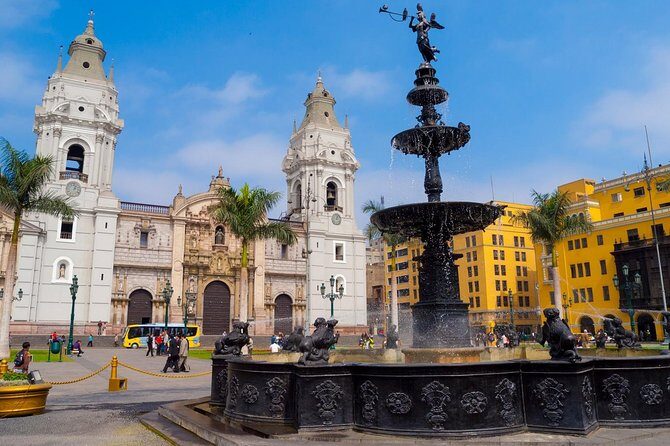
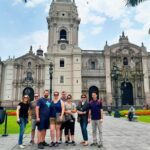
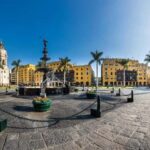
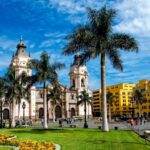
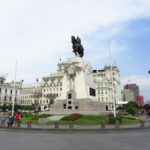
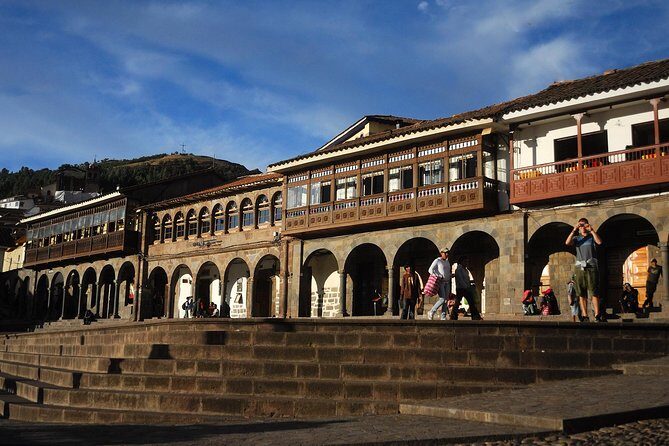
In Plaza de Armas (Plaza Mayor), you’ll walk through the historic downtown Lima core, a UNESCO World Heritage Site. It’s compact, but it’s a useful start because you can feel how the city grew around this civic center.
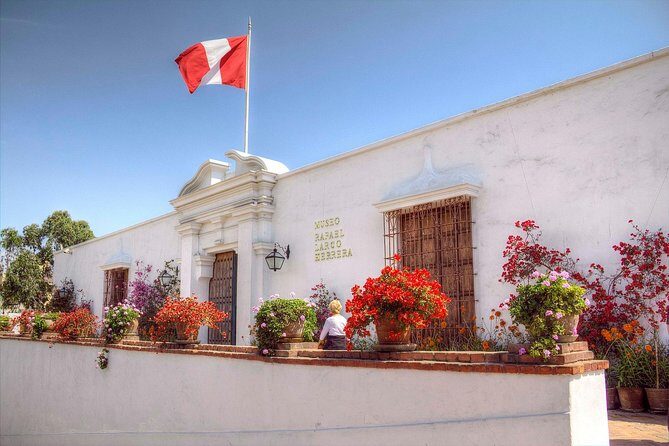
Then comes one of my favorite early anchors: Museo Larco. This museum helps you connect the dots across ancient Peru through gold pieces, textiles, and even erotic pottery, with the museum warehouse open during your visit so you can see additional art expressions. It’s not just objects on shelves—it’s a way to understand how different cultures viewed the world.
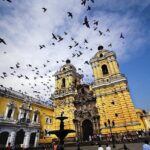
You’ll also hit two major religious stops. At the Lima Cathedral, you’ll see the crypt of the conquistador Francisco Pizarro. And at Basilica y Monasterio de Santo Domingo, you’ll find the remains of Santa Rosa de Lima, San Martín de Porres, and San Juan Masías, plus a library with books printed in the 15th century and a connection to the first University of America (San Marcos). If you like your travel with context, this day is strong.
Practical note: your walking is real, but it’s manageable. The bigger challenge later is altitude, not Lima.
If you're still narrowing it down, here are other tours in Lima we've reviewed.



Nasca Lines From the Air, then Paracas by Boat: Candelabro and Penguins
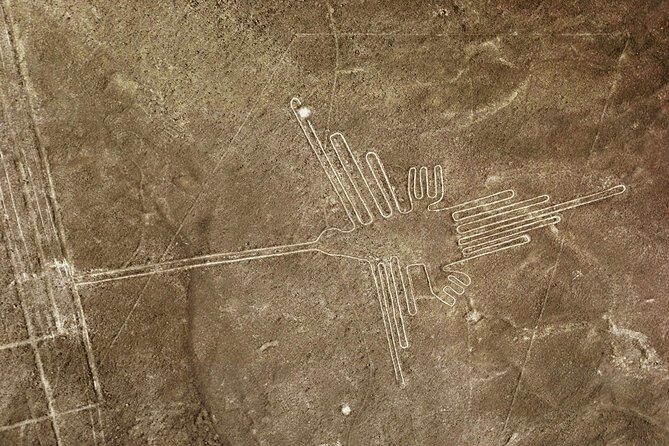
After leaving Lima, your trip turns desert-fast. The plan takes you toward Paracas and Pisco so you can fly over the Nasca Lines, famous for huge drawings only really readable from the sky.
From the bus to Paracas, then to Pisco for the flight, this is a day built around one payoff: looking for animals like a monkey, hummingbird, condor, and spider—often interpreted as an ancient astronomy calendar tied to desert knowledge. You’re not hiking for hours to reach a viewpoint. The viewpoint is the plane.
Then you pivot to sea life. In Paracas, you’ll cruise to the Ballestas Islands by motorboat, with stops that include the famous Candelabro—a giant sand hill carving facing the Pampa de Nasca. In the islands area you can expect Humboldt penguins, seals, and migratory birds.
By afternoon you’ll head back to Lima and reset. This is one of those days where having logistics handled is a genuine relief—transfers, timing, and getting you from desert to coastline.
What to think about: boat excursions can be choppy. If you’re sensitive to motion, bring motion-sickness protection.
Arequipa’s White City With Volcano Views and Santa Catalina’s Walls
Arequipa feels like a different planet from Lima. The “White City” nickname isn’t just marketing—it’s the stone, the brightness, and the way the city sits in front of the Andes.
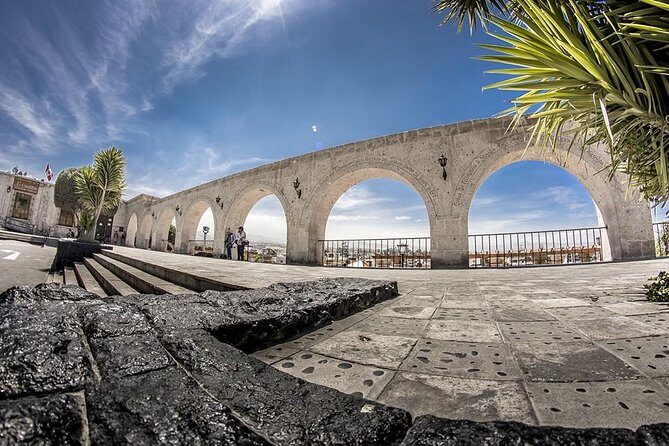
Your tour begins in the colonial neighborhood of San Lázaro and then winds through streets known for colorful touches like geraniums. From there, you go up toward Carmen Alto, one of the observation points that frames the volcano trio: Misti, Chachani, and Picchu-Picchu.
Next comes the colonial-style contrast around Yanahuara and its viewpoint. You get the pattern: view, neighborhood, viewpoint, then a major monument.
A highlight here is Santa Catalina Monastery, which was closed for nearly 400 years. It’s easy to spend time just reading how the place is built—narrow streets, squares, and gardens that feel like a small world of its own. Then you finish with Plaza de Armas, the Cathedral, and the Church of the Jesús Company (Jesuit history from the 17th century).
This day is ideal if you like architecture plus geography. Arequipa gives you both without making you choose.
Colca Canyon by Land: Patapampa at 4,900 m and a Condor Sunrise
If you want dramatic scenery without a complex trekking commitment, Colca Canyon is your stop. The route moves over the Andean pass scenery, with multiple viewpoints and one big “watch and feel small” moment.
Your first key stretch is the drive through the volcanos, including big views of Misti and Picchu-Picchu along the way, plus a stop at Pampa Cañahuas, a vicuña reserve where vicuñas live and are protected. You’ll climb up to the highest point of the day at Patapampa (4,900 m), where you can also see the active Sabancaya volcano.
After descending into the Colca Valley, you get lunch at the hotel and free time. The itinerary specifically calls out the chance to relax in thermal waters nearby. That’s not fluff—after altitude days, this kind of decompression helps.
Then comes dawn. The next morning you go to Cruz del Cóndor, timed for the condors. The views are built to show the canyon’s scale, and condor flight is the “icon moment” people travel for. You’ll also visit the towns of Maca and Yanque, with their colonial churches, and you’ll get lunch in the area before heading on to Puno.
Consideration: altitude hits differently person to person. The trip itself flags the need to bring altitude sickness medicine or ask a doctor before you go.
Lake Titicaca: Uros Floating Islands to Taquile’s Music and Traditions
Puno and Lake Titicaca are about culture tied to water. Instead of chasing modern sights, you’ll visit communities that maintain older ways of life in the lake setting.
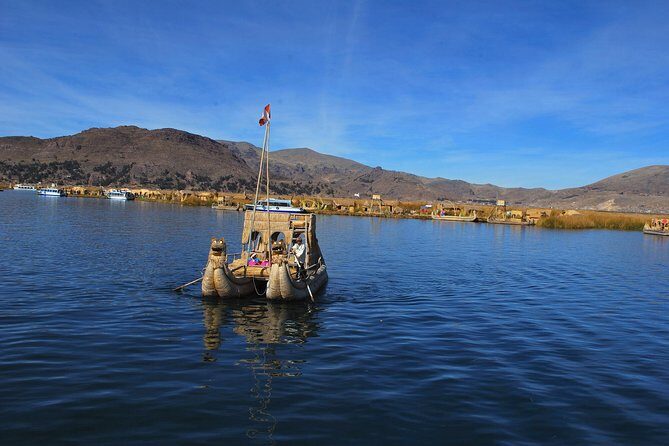
In the morning you board a motorboat to visit the Uros, described as a people who once sought refuge inside Lake Titicaca, fleeing arriving powers. You’ll see how they keep building islands using ancient techniques. You’ll also meet people who earn their livelihood by hosting visitors—this is community interaction, not a staged museum stop.
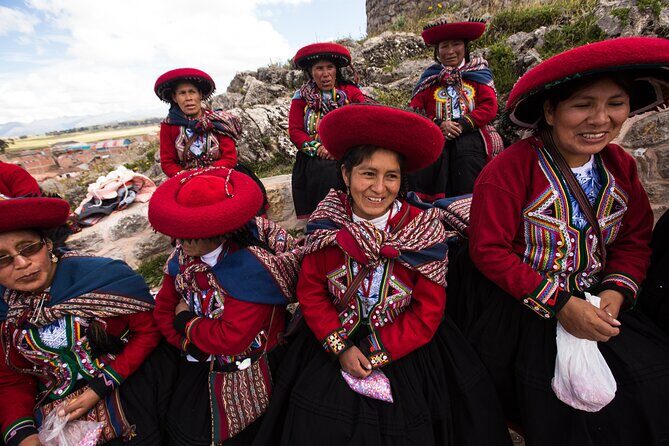
Then you continue to Taquile. The people there maintain traditions, clothing, and daily life patterns described as still strongly rooted. Your visit includes music and dances, and you’ll have lunch at a community restaurant—simple, but the tour positions it as nutrient-rich.
After lunch, you take a walk to appreciate the lake views before returning to Puno.
Practical note: the water day means you’ll likely feel the cold wind. A warm layer helps, even when the sun looks friendly.


The Cusco Road Trip: La Raya Pass (4,335 m), Pucará, Racchi, and Andahuaylillas
This is a long transfer day, and that’s the point: it’s how you move from Titicaca territory toward Cusco while collecting major cultural stops.
Your route includes La Raya Pass (4,335 m), described as the geographic division of water basins—one feeding the Titicaca side, the other heading toward the Amazonas basin. The feeling here is high-elevation and open. It’s also where weather can change fast.
Before Cusco, you stop at Lithic Museum of Pucará, which preserves local culture remains like monoliths, stelas, and animal-shaped sculptures. Pucará also offers toritos de Pucará—small multicolored handicrafts tied to protection, happiness, and fertility.
Then you visit Racchi, home to the Temple of the god Wiracocha—notable for its stone base of large columns and walls. It helps explain how grand the empire’s sacred architecture could be, even in smaller towns.
Finally, you end at San Pedro Apóstol de Andahuaylillas, known as the Sixtina de América for its painted ceilings and walls. The emotional hit is usually strong because it’s art made for religious attention, not just decoration.
Then you arrive in Cusco and transfer to your hotel.
Tip for you: if you can, plan an easy night in Cusco. The next day is loaded.
Cusco in One Shot: Sacsayhuaman, Qorikancha, Markets, and Cathedral
Cusco’s old stones are not one attraction—they’re a whole system. This day is designed to hit the main sacred-and-city layer efficiently, without losing context.
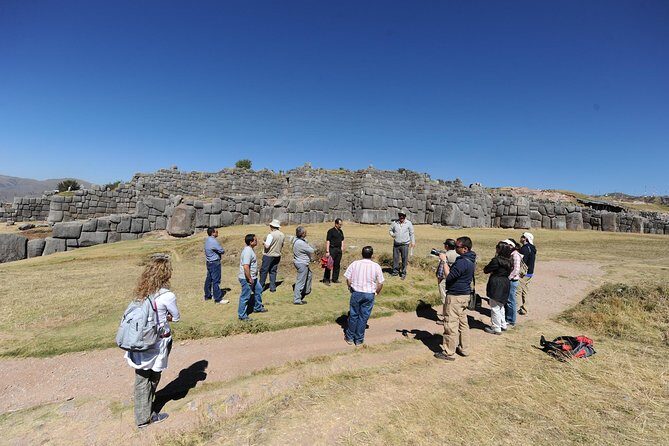
You start by moving toward Sacsayhuaman, a citadel of colossal constructions surrounded by dramatic setting. The itinerary keeps you moving, so expect more photos and big-picture looking than lingering in one spot.
You continue to Q’enqo, with its rock-embedded altar for sacrifices, and then Tambomachay, described as architecturally notable and tied to Andean cosmovision.
After the sacred sites, the route turns practical and fun: you visit Mercado Central de San Pedro to absorb local flavors and products. Then there’s Mirador de San Cristóbal for panoramic overview.
A top highlight is Qorikancha, the Temple of the Sun, where walls that used to be covered in gold are part of the story. Then you walk down Calle Hatun Rumiyoc, stopping for the famous Twelve Angled Stone.
Your day closes with the Cusco Cathedral, which houses colonial works with incredible value.
If you’re worried about feeling rushed: the upside of a small group is that the guide can pace you, and you’re not stuck in a huge crowd that never moves.
Sacred Valley Day: Pisac, Weaving and Chicha, Moray, and Maras Salt Mines
The Sacred Valley day pattern is smart: it mixes archaeology, markets, and living culture—plus it builds toward the train portion later.
You start at Pisac, both the Inca village area and a sweeping view from above. Then you get time in the Pisac market, plus artisan workshops. If you like buying things that have a real local link, this is one of your best moments.
Next you visit Museo Inkariy, which focuses on pre-Hispanic cultures of ancient Peru through exhibits in different halls, and then you continue to Yucay Live Culture Center. This stop leans hard into daily skills: weaving and dyeing traditional textiles, adobe making, preparation of chicha (corn drink), and a close encounter with Andean camels like llamas and alpacas.
Then your route continues to two natural-culture landmarks. You visit Moray, described as Inca terraces designed to recreate 20 microclimates for agricultural production. After that comes Salinas de Maras, the ancient salt mines still exploited. The contrast between white salt wells and clay ground makes it one of those places you’ll want photos of—and they’re the kind of photos that show how people use terrain, not just how terrain looks.
You also stop at Ollantaytambo later on this stretch. You’ll walk its streets, plazas, and terraces as one of the last Inca living villages, then you enter the archaeological site where you can see stone-working techniques. There’s also mention of a Sun temple that was left half built.
That’s the bridge to your next big moment: your train to the Machu Picchu area and an overnight stay there.
Train to Machu Picchu: Timed Entry, Bus Climb, and Visitor Circuits
Your Machu Picchu day is built around smooth movement: train first, then bus up, then a guided arrival into the site.
You board at Ollantaytambo station, then take your chosen train to Machu Picchu station. Your arrival includes assistance to board the bus that climbs a winding road with views over the Urubamba river canyon.
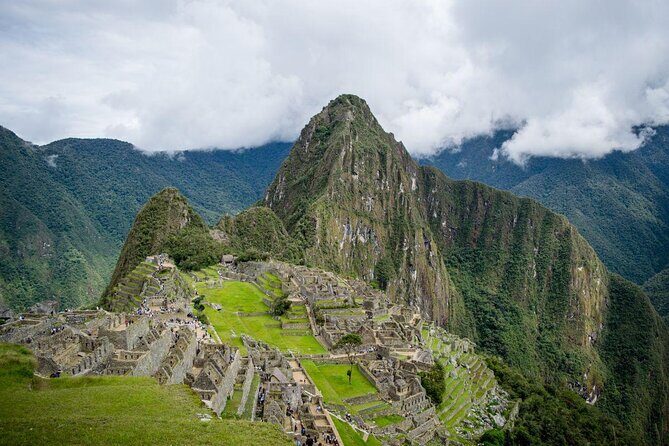
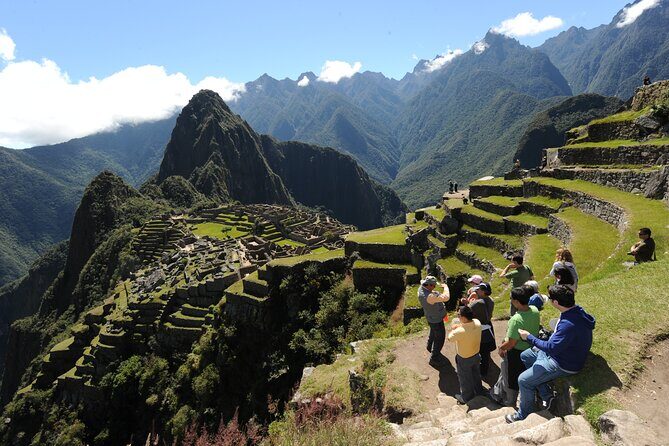
Once you reach Machu Picchu, you’ll walk the terraces, staircases, ceremonial sites, and urban areas. The itinerary frames the experience as something that gives you energy—because the place is designed to make you feel like you’re entering a functioning sacred city.
Key practical detail you should know: Machu Picchu has visitor circuits, with three main routes and specific differences to distribute crowds while protecting areas of the site. Your tour prioritizes circuit route 2 when available. If not, the options include circuit 3B or circuit 1B, and you’ll confirm before tickets are issued.
Also, your visit time is scheduled via shifts, with shared tour windows mentioned as 9 am, 10 am, and 11 am. So you’re not free-floating through the day—your access is timed.
After your visit and lunch, you return by train and transfer back to your hotel in Cusco.
Consideration: because the Machu Picchu admission ticket is non-refundable and date changes aren’t accepted, treat this day like your anchor. If you have to reschedule anything, know that you might need to purchase a new ticket.
Cusco After Machu Picchu: A Free Day for Rainbow Mountain or Huaypo Lake Kayak
After Machu Picchu, your schedule becomes flexible. You get a free day in Cusco to pick what matches your energy.
Two specific options are suggested:
- Vinicunca (Rainbow Mountain) at around 5,000 m, in the Ausangate mountain range area near the Vilcanota River valley. This is the kind of high-altitude option that rewards you if you’re feeling strong.
- Kayak in Huaypo Lake, paddling while snowcapped mountains provide the backdrop, with lunch on the lake banks.
Because this is free time, you can also simply rest, explore at your own pace, or do shorter cultural wandering in central Cusco. Just remember: Cusco altitude is real, and your body may want a slower day after long sightseeing.
Wrapping Up in Lima: One Last City Window
On day 15, you’ll transfer to the airport and fly back to Lima. Then you arrive, get assistance, and transfer to your hotel again, with free time for you to discover the city at your own pace.
This final day is useful because it reduces stress: you’re not packing for a second overnight chain right after Machu Picchu.
Price and Logistics: What $2,397 Really Buys You
At $2,397 per person, this isn’t a budget trip. But it’s also not “pay for a list of places.” It’s paying for the glue that connects the places.
Here’s what’s included that matters:
- 14 nights accommodation across the itinerary
- All transfers between airports, hotels, train station, and bus station
- All tours and excursions in the plan
- Bilingual Spanish/English live guide service
- Nasca Lines flight from Pisco with Aerodiana Airlines
- Breakfasts (14) and lunches (7)
- Train included, with the specific train type depending on your booking class:
- Economy/Tourist: Expedition or Voyager
- First/Deluxe: Vistadome or Machu Picchu 360
If you tried to build this trip yourself, you’d likely spend time coordinating flights, trains, timed entries, and transfers—then still end up with last-minute hiccups. The value here is the scheduling and support that keeps the whole chain moving.
Main “watch-outs” for value:
- The itinerary notes the Pisco airport tax is $5.00 per person (not included).
- Machu Picchu entry is not refundable, so timing protection is part of the cost of doing this right.
Should You Book the 15-Day Great Inca Expedition?
Book it if you want a high-contact, guided route across Lima, Andes cities, and two signature “hard-to-coordinate” experiences: Nasca from the air and Machu Picchu with a circuit-based timed entry. The small group size and bilingual support are a big advantage when you’re moving through a lot of different environments in a short time.
Skip it (or at least think hard first) if you know you’re likely to reschedule travel dates. That Machu Picchu ticket policy is strict, and this itinerary is built around exact timing.
If you’re comfortable with altitude risks and bring the right tools (medicine guidance, hydration, and a slower pace when you need it), this is one of those trips that feels like it’s built to keep you moving forward—without leaving you lost.
FAQ
How big is the group for this tour?
The tour has a maximum of 12 travelers.
Do I get a guide, and what languages are used?
Yes. You’ll have a live bilingual guide with Spanish and English service.
What meals are included?
The package includes 14 breakfasts and 7 lunches. Food and drinks are otherwise not included unless specified.
Are transfers between airports, hotels, and stations included?
Yes. All transfers between airport/hotel/railway station/bus station are included.
Which train will I ride for Machu Picchu?
The train depends on your booking class:
- Economy or Tourist Class: Expedition or Voyager
- First or Deluxe Class: Vistadome or Machu Picchu 360
What about the Nasca Lines overflight?
The tour includes an overflight of the Nasca Lines from Pisco Airport using Aerodiana Airlines. The tour notes that the overflight is not recommended for children under 8.
Is the Machu Picchu ticket refundable?
No. The Machu Picchu admission ticket is not refundable, and date changes or amendments are not accepted.