REVIEW · LIMA
Enjoy Lima Walking Historic Center San Martin and Plaza Mayor
Book on Viator →Operated by Abixeo Peru Group · Bookable on Viator
San Martín and Plaza Mayor in one easy walk. That’s the hook. This is a focused Lima Historic Center walking route that strings together the city’s main landmarks with just enough time to understand what you’re looking at: independence-era grandeur, early colonial churches, and the darker secrets under a convent.
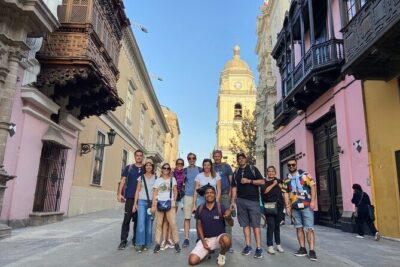
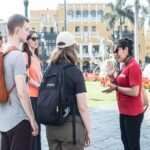
What I really liked is how the tour gives you story + sight at the same pace. Plaza San Martín (opened in 1921 for the centenary of Peruvian independence) isn’t just a photo stop; you learn what the statue of Don José de San Martín represents and why the surrounding buildings feel like Lima showing off. And with guides like Gabriel, Alvaro, and Bernice, you get clear explanations, plenty of patience for questions, and time for pictures without feeling rushed.
The only drawback to consider is simple: in about 2 hours, you cover a lot of ground and each place gets a short window. If you want long, quiet museum-style time inside every site, this route is more of an efficient orientation than a slow wander.
In This Review
- Key highlights you’ll actually feel on the street
- Entering Plaza San Martín: the independence mood-setter
- Jirón de la Unión: the pedestrian corridor where Lima’s story keeps walking
- La Merced Church and Convento: Baroque art with real early-city roots
- Plaza de Armas / Plaza Mayor: where Lima’s political life—and independence—shows up
- San Francisco’s convent and catacombs: the dramatic side of Lima’s Colonial era
- Parque de la Muralla by the Rimac: old walls, garden time, and a view of Cerro San Cristóbal
- Price and logistics: what $35 buys you in real value
- Optional pisco tasting: a small extra that can make the day click
- Guides make the difference: Gabriel, Alvaro, and Bernice in action
- Who should book this walking tour
- Should you book Enjoy Lima’s Historic Center walk?
- FAQ
- How long is the Lima Historic Center walking experience?
- How much does the tour cost?
- Where does the tour start and where does it end?
- What’s included in the price?
- Is there an admission ticket fee for the stops?
- How big is the group?
- Is the pisco tasting required?
- Is it possible to cancel for a full refund?
Key highlights you’ll actually feel on the street
- Plaza San Martín’s independence-era framing (1921) makes the start of the walk instantly meaningful
- Jirón de la Unión connects two major plazas and runs like a living timeline through shop-lined history
- La Merced (founded 1535) links church art to Lima’s earliest official moments
- Plaza de Armas / Plaza Mayor puts you at the political center tied to 1821 independence
- San Francisco’s convent and catacombs add a darker, memorable layer to the Historic Center
- Parque de la Muralla by the Rimac gives views and wall remains, not just buildings
Entering Plaza San Martín: the independence mood-setter
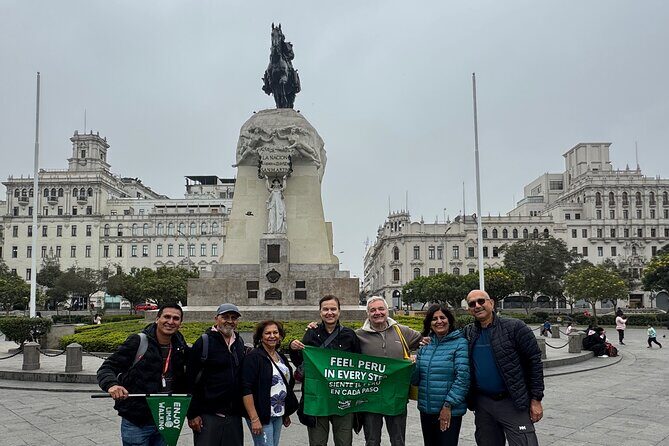
Your walk starts around Plaza San Martín, a square that feels like Lima’s history dressed for a formal occasion. The plaza opened in 1921 to celebrate the centenary of independence, and you can see that intent in the way it’s laid out and how the big central presence anchors the space. The statue of Don José de San Martín is the obvious focal point, but the real value is understanding why this square exists where it does—Lima didn’t just inherit the past; it built monuments to frame the national story.
I like the mix of architecture around the square. You’ll notice the elegant façades and the way different styles sit side by side, including the kind of neoclassical and Art Nouveau feel mentioned for this area. That matters because it helps you stop treating the Historic Center like a list of pretty buildings. Instead, it becomes a place where newer generations kept shaping how Peru wanted its story told.
One practical note: this is one of the busiest “classic Lima” areas. If you’re sensitive to crowds, keep your expectations realistic: you’ll be taking photos in a real public square, not a movie set.
Other historic center and catacombs tours in Lima


Jirón de la Unión: the pedestrian corridor where Lima’s story keeps walking
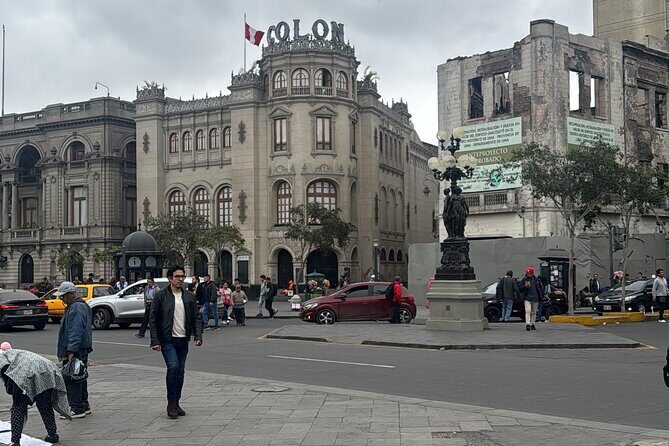
Next you move onto Jirón de la Unión, often described as the most emblematic street in the Historic Center. Here’s why that line matters: this street literally links Plaza San Martín to Plaza Mayor, so it becomes a bridge between two different “moods” of the city—independence symbolism on one end, colonial and political origins on the other.
What I find smart is how the route treats the street as more than a hallway to get somewhere. You walk through a pedestrian passage packed with shops and historic architecture, and the guide ties it to a long timeline—about 400 years of Lima history. That’s a handy mental trick. When you’re standing still, it’s easy to think of old Lima as frozen. On Jirón de la Unión, you feel continuity. The street’s job has changed, but the spine is still there.
If you like urban life, this part delivers. It’s not only stone and churches—it’s daily movement, commerce, and the city’s personality as it exists right now.
La Merced Church and Convento: Baroque art with real early-city roots
Then comes one of the stops that turns the volume down and the meaning up: Iglesia y Convento La Merced. This is a Baroque church and convent connected to the early start of Lima itself. The Mercedary Order founded it in 1535, almost together with the city. That’s a powerful detail, because it means you’re looking at an institution that grew up alongside Lima—not something imported later after the city was already established.
Inside the church focus (or at least on what you’ll be shown during the time you’re there), the main things to pay attention to are the stone-carved façade and the golden altarpieces. Baroque churches can be overwhelming if you don’t know what to look for, but the guide framing helps. You start noticing the balance between heavy ornament and structured design.
The other standout piece is historical: this is said to be where the first official Mass of Lima was celebrated. That line turns “pretty church” into “early Lima milestone.” Even if you’re not a religious-history person, it gives you a reason to slow down for a minute and take it in.
Plaza de Armas / Plaza Mayor: where Lima’s political life—and independence—shows up
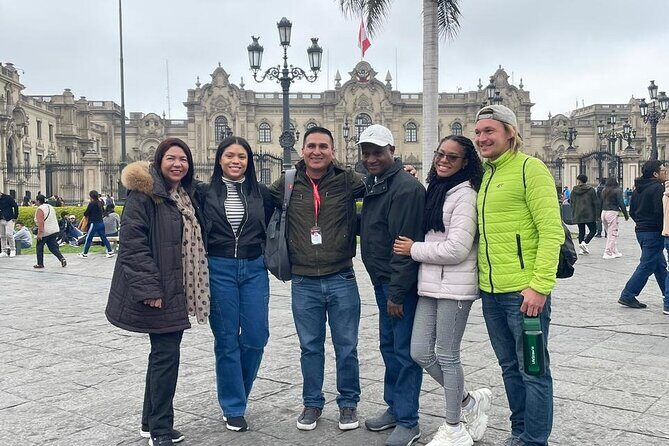
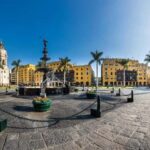
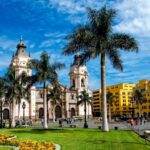
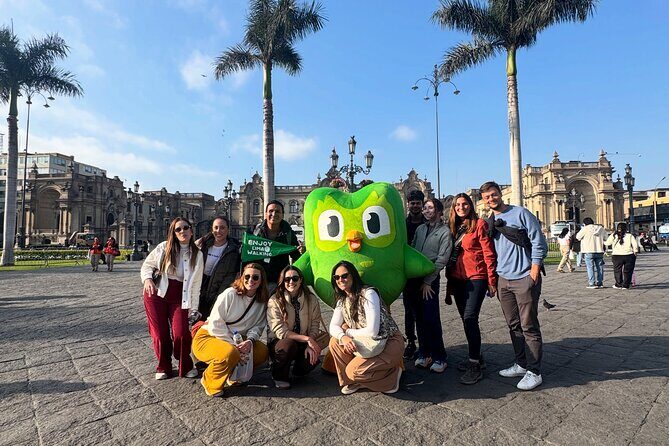
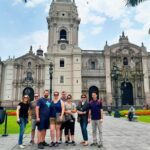
After walking the connector street, you step into the historic core: Plaza de Armas, also called Plaza Mayor. This is the heart of Lima, tied directly to its founding. It was founded by Francisco Pizarro in 1535, which places you at the moment the city was born. It’s not just a pretty square; it’s the literal stage for major power.
You’ll see the big institutional buildings around it, including the Government Palace, the Lima Cathedral, and the Municipal Palace. Standing here, it’s easier to connect dots between architecture and governance. You can almost read the city’s priorities in stone: authority, religion, and civic order all facing inward toward the same open space.
The most important historical tie from the tour description is independence. This is also the point where the Independence of Peru was proclaimed in 1821. Even if you only catch the gist, knowing that date changes the feel of the plaza. It stops being a postcard scene and starts feeling like a hinge moment.
Tip for photos: the open square can give you lots of angles. If you want a clean shot without too many heads in frame, wait for a gap between groups, then take two or three quick pictures rather than holding the phone up for a long time.
San Francisco’s convent and catacombs: the dramatic side of Lima’s Colonial era
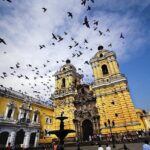
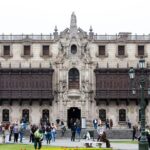
Next is the kind of place that makes the Historic Center feel more real: Basílica y Convento de San Francisco, Lima. This complex is from the 17th century, and it’s described as one of Lima’s greatest treasures within the World Heritage area. The architecture is Baroque, and you’ll notice that drama right away.
The time you spend here usually focuses on what makes San Francisco memorable beyond the general “old church” label. The guide points out the colonial library and the catacombs—important because they served as a cemetery during the viceroyal era. That detail adds weight. Lima’s colonial story isn’t only gold altars and elegant plazas. It also includes how people lived with death, memory, and the city’s hierarchy.
If you’re the kind of person who likes history that has teeth, this stop is often the one people remember later. It’s also a good counterbalance to the brighter public squares. Here, you feel the quieter, enclosed side of power and tradition.
Practical expectation: because the tour is time-limited, you won’t have an all-day crawl. You’ll get the high points and the key context, which is perfect for an intro day in Lima’s center.
Other walking tours we've reviewed in Lima


Parque de la Muralla by the Rimac: old walls, garden time, and a view of Cerro San Cristóbal
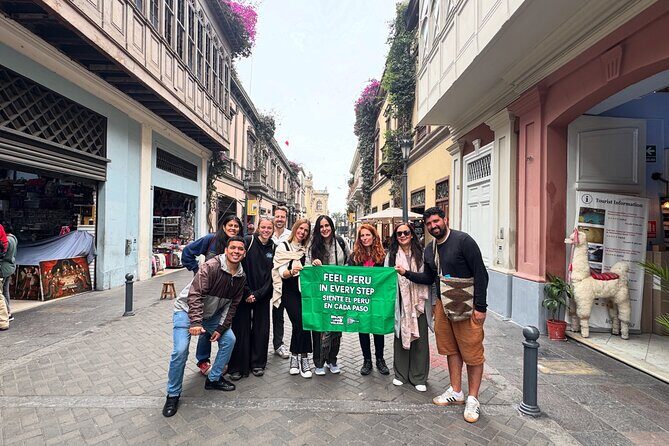
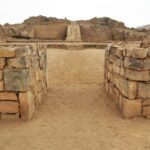
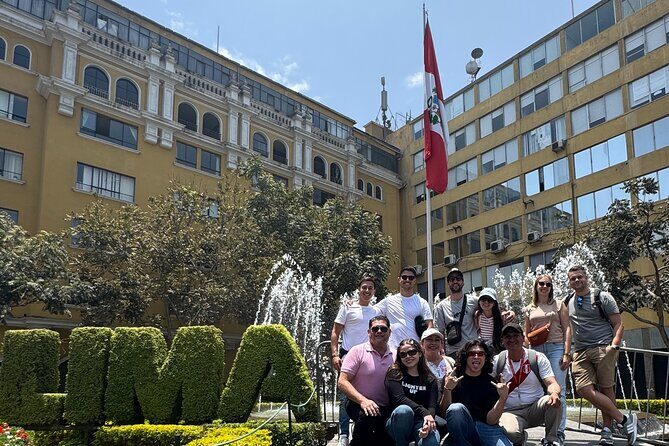
To close, you head to Parque de la Muralla, near the Rimac River. This stop adds a different kind of history: city defense. The park preserves remains of the ancient wall that surrounded Lima in the 17th century, built to protect the city from pirates. That’s a fascinating shift from church towers and political palaces to something built for survival.
Now it’s a recreational space—gardens, viewpoints, and a monument to Francisco Pizarro. The practical bonus is the view. From here you can see Cerro San Cristóbal, which gives your brain a “Lima isn’t flat” moment. After concentrating on plazas and façades, it helps to get a wider perspective.
I like this ending because it avoids the awkward “tour ends, now what?” feeling. You step into a calmer pocket where the city opens up, and you can decide how long you want to linger on your own.
Price and logistics: what $35 buys you in real value
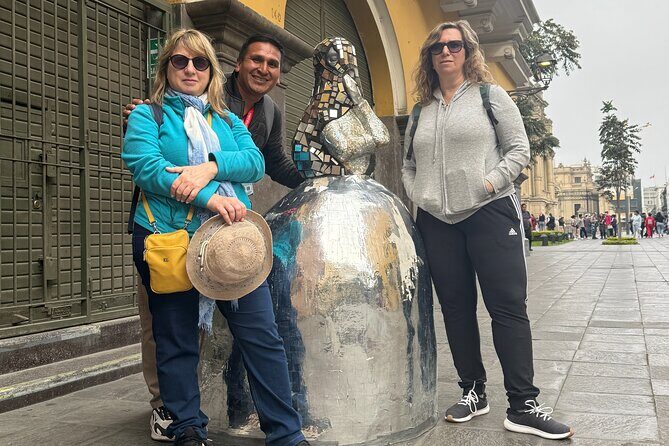
The price is $35 per person for about 2 hours with an official tourism guide. The group size is capped at 20 travelers, which matters more than it sounds. Smaller groups generally mean less time waiting around at crowded points and more chances for questions.
All of the listed attractions are free admission ticket for the tour stops. That’s a big deal for value. It means you’re not paying again and again just to see what the route promises. Your main cost is the guided experience itself: the explanations, the sequence, and the context that turns “I saw a church” into “I understand why this church matters.”
One more value angle: the pacing fits a first-timer day. In two hours, you get an orientation to Lima’s center—where the independence story sits, where colonial institutions cluster, and where defense-era history still shows in the landscape.
If you hate walking, this might feel like a test. But this is a walking tour through dense central Lima; you’ll want comfortable shoes and a bit of stamina.
Optional pisco tasting: a small extra that can make the day click
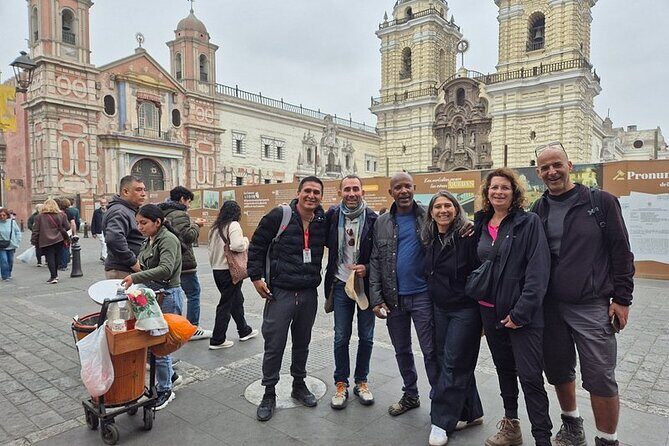
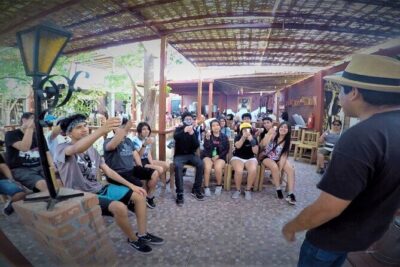
Included in the experience is an optional pisco tasting. If you do it, it likely happens at the end, acting like a final “yes, I’m here” moment after the history-heavy walk.
Even if you skip the tasting, you still get the main thing you paid for: the Historic Center route with guide-led explanations. And if you do take the tasting, it’s a low-effort cultural add-on—exactly the kind of final touch that makes a short tour feel complete.
Guides make the difference: Gabriel, Alvaro, and Bernice in action
A standout theme in the guide feedback is the human style of the experience. Guides like Gabriel are praised for being patient and for giving a lot of knowledge without turning it into a lecture. Alvaro is noted for being engaging and funny, and for adding anecdotes and extra context. Bernice is highlighted for being knowledgeable and engaging, and for making the two-person dynamic feel like a bonus private-style experience.
You don’t need to pick a guide in advance to benefit. The bigger lesson is that this tour focuses on explanation quality and pacing with room for photos. If you want a guide who answers questions and keeps the walk from feeling like you’re dragging a group through time, this route is built for you.
Who should book this walking tour
This is a strong fit for you if:
- You’re spending limited time in Lima and want a high-signal introduction to the Historic Center
- You enjoy walking routes that connect sites into a story, not just a list of stops
- You want free sightseeing plus an optional cultural finish like pisco
- You like learning through architecture and dates rather than museum-style reading
It’s less ideal if:
- You need long, slow time at each location
- You dislike crowded public plazas
- You want a tour that focuses only on one theme (for example, only churches or only independence)
Should you book Enjoy Lima’s Historic Center walk?
Yes, if you want an efficient, well-paced way to get your bearings fast in Lima’s core. The route hits the big pillars—Plaza San Martín, Jirón de la Unión, La Merced, Plaza Mayor, San Francisco, and Parque de la Muralla—and the guide context turns those names into something you can actually recall.
Book it especially if you’re the type who likes the “why” behind a place. The value here is not only seeing historic sites for two hours. It’s learning how they connect—from 1535 founding energy to 1821 independence proclamation, then ending with wall remains and city views by the Rimac.
If you have a flexible afternoon and comfortable walking shoes, this is one of the smarter ways to spend time in central Lima. And if you add the optional pisco tasting, you’ll leave with a final flavor of Peru that matches the day’s theme: history you can taste and remember.
FAQ
How long is the Lima Historic Center walking experience?
It lasts about 2 hours.
How much does the tour cost?
The price is $35.00 per person.
Where does the tour start and where does it end?
It starts at Gran Hotel Bolívar in Lima (Jirón de la Unión 958) and ends at Muninet Parque La Muralla on Jirón Amazonas, about two blocks from Plaza Mayor.
What’s included in the price?
An official tourism guide is included, plus an optional pisco tasting.
Is there an admission ticket fee for the stops?
The itinerary lists free admission tickets for the stops.
How big is the group?
The maximum group size is 20 travelers.
Is the pisco tasting required?
No. It’s optional.
Is it possible to cancel for a full refund?
Yes. You can cancel up to 24 hours in advance for a full refund.