REVIEW · LIMA
City Tour Panoramic Bus Departure from Larcomar
Book on Viator →Operated by TURIBUS · Bookable on Viator
Lima is a city where viewpoints matter. Starting from Larcomar, you get right into that mix of ocean air, cliffside views, and quick orientation before the guided walking turns you loose in the historic center. I especially like the guide-led pacing and clear English (with guides like Bryan and Yoanna popping up in recent experiences), and I like that you cover both the Miraflores coast zone and the major Plaza Mayor sights in one 4-hour loop. One caution: Lima traffic can stretch the drive time, and that can affect how smooth the return feels.
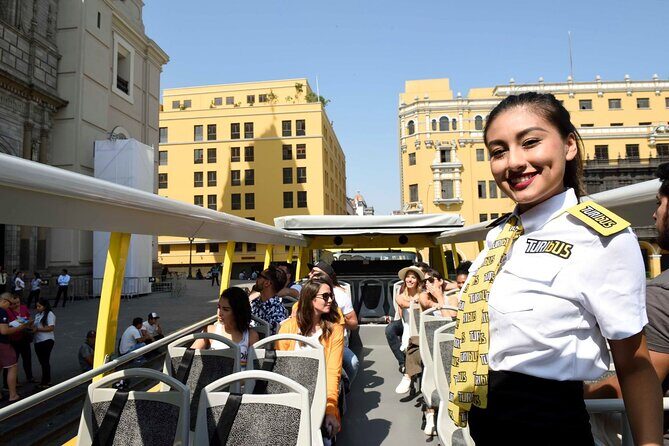
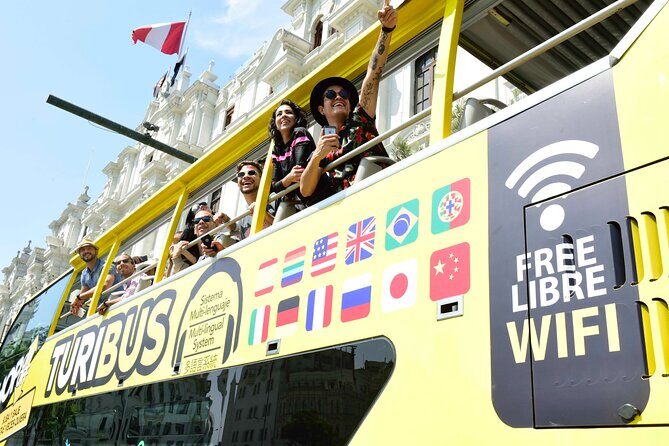
This tour also keeps you comfortable. You’re in an air-conditioned vehicle with onboard WiFi and USB chargers for your phone, and the route is set up so you’re not stuck sitting still the whole time.
The main trade-off is that the day needs decent weather. If conditions are poor, the operator may offer a different date or a full refund, so keep an eye on that forecast before you lock in plans.
In This Review
- Key Highlights You Should Care About
- Why Start at Larcomar Instead of the Historic Center
- Pucllana Site Museum: Pre-Inka Ceremonial Center in Miraflores
- Plaza de Armas: Where Lima’s Government and Churches Face Each Other
- Lima Cathedral: The Site Switches from Inca Sacred Space to Spanish Church
- Jirón de la Unión and the Municipal Palace: Civic Lima at Close Range
- Government Palace of Peru: Casa de Gobierno and the Long Run of Power
- Comfort on Wheels: Air-Conditioned, WiFi, and Phone Charging
- Timing and Traffic: A Real Lima Consideration
- Price and Value: Is $35 a Good Deal for This Route?
- Who This Tour Fits Best (and Who Might Want Another Option)
- Should You Book the Panoramic Bus Tour From Larcomar?
- FAQ
- What is the duration of the Lima city tour from Larcomar?
- How much does the tour cost?
- Where do I meet for the tour?
- Is pickup from my hotel included?
- What’s included in the ticket price?
- Are snacks included?
- Is WiFi available during the tour?
- Are phone chargers provided?
- Is there a weather requirement?
- Can I cancel for a full refund?
- Is the tour suitable for most travelers?
Key Highlights You Should Care About
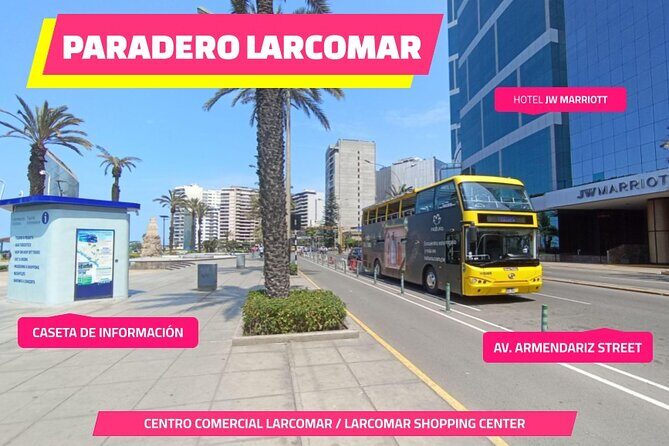
- Larcomar’s cliff setting: a “floating” shopping-and-leisure spot built over a void above the Malecón.
- Pucllana Site Museum stop: a Pre-Inka ceremonial center right in Miraflores.
- Plaza de Armas walking focus: government buildings, churches, and the historic street grid.
- Lima Cathedral origins: built on the Inca shrine site, tied to the Puma Inti story.
- Comfort extras in the bus: WiFi and USB charging in every seat area.
- English guidance options: recent guides (like Bryan and Yoanna) are a big part of the value.
Why Start at Larcomar Instead of the Historic Center
Larcomar is where you get Lima’s vibe fast. It sits on top of a cliff in Miraflores, and the design is built around that dramatic drop to the ocean-side void. In plain terms: it feels like the complex is floating above the water, which is exactly what you want at the start of a city tour.
A few details make it more than just a pretty viewpoint. The complex was developed in the Malecón de la Reserva sector, and the park you see today connects to earlier park space while also covering infrastructure like vehicle basements and multiplex cinemas. You might even notice the underground ventilation system in the form of large bluish glass “chimneys” appearing in the park—cool and a little unexpected.
And because it’s in Miraflores and near major hotels, Larcomar is simply convenient. Expect plenty of foot traffic, which also helps with meeting energy: it’s an easy place to find your group and get oriented before the driving starts.
Other Lima city tours we've reviewed in Lima

Pucllana Site Museum: Pre-Inka Ceremonial Center in Miraflores
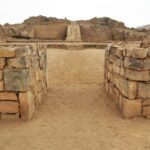
Pucllana Site Museum is one of those stops that makes your Lima tour feel like more than just colonial buildings. This is a Pre-Inka ceremonial center in the Miraflores district, so you get a time jump right in the middle of the city’s modern seaside area.
What you’re looking for here is context: Lima wasn’t just a Spanish colonial hub. The ceremonial center is a reminder that this region had important indigenous presence long before European arrival. Even if you’re not going deep on archaeology, it’s a satisfying contrast—especially after you start the tour by watching the coastline energy from Larcomar.
One practical note: because this is a museum-style site, you’ll likely do some walking on uneven ground. Wear shoes you don’t mind using, not fancy sandals you’ll regret later.
Plaza de Armas: Where Lima’s Government and Churches Face Each Other
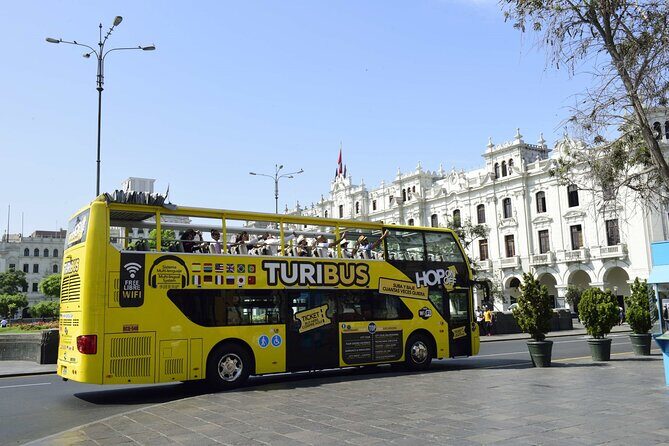
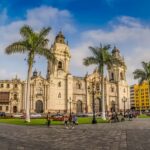
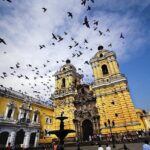
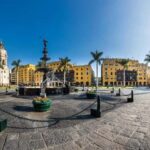
After Pucllana, the tour shifts into the historic center and lands at Plaza de Armas de Lima—the foundational public square of Lima. This is the main stage where the city’s early civic power and religious power sit side by side.
Around the square you’ll find the Government Palace of Peru, Lima Cathedral, the Church of the Sagrario, the Archbishop’s Palace, the Municipal Palace, and the Club de la Unión. The street grid radiating from the plaza matters too: the square is intersected by Jirón Junín, Jirón de la Unión, Jirón Huallaga, and Jirón Carabaya. That means you’re not just looking at one landmark—you’re seeing how Lima’s urban plan works.
In my view, this stop is the payoff moment for first-timers. From the plaza, it all starts making sense: why certain buildings are where they are, how government space is arranged, and how the mix of Spanish-era architecture defines much of central Lima’s feel.
Lima Cathedral: The Site Switches from Inca Sacred Space to Spanish Church

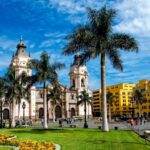
The Lima Cathedral stop goes past the obvious façade. You learn that the cathedral was built on a site tied to Inca sacred structures—specifically the shrine of Puma Inti and the palace of the Cusco prince Sinchi Puma, a descendant of Inca Sinchi Roca.
When Francisco Pizarro founded Lima, he didn’t just pick a random plot. He allocated land for a church, and the transfer was handled with a notarized certificate tied to Sinchi Puma renouncing assets—part of how ownership disputes were avoided for the chosen church site.
Key dates help you visualize the build timeline. In 1535, Pizarro laid the foundation stone and publicly carried the first beam. Construction was completed in 1538, and the cathedral was inaugurated in 1540 with the consecration of the Holy Eucharist for the first time, dedicated to Our Lady of the Assumption.
Even if you’re not a church superfan, these details make the building feel alive rather than just old. It’s a place where the city’s layers are visible: Inca presence, Spanish arrival, and centuries of power.
Jirón de la Unión and the Municipal Palace: Civic Lima at Close Range
From Plaza de Armas area streets, the tour includes Jirón de la Unión 300, where the Municipal Palace of Lima serves as the main headquarters of the Metropolitan Municipality of Lima.
This isn’t the stop you take photos of for fun. It’s more about understanding how the square’s legacy extends into present-day city governance. The building faces the historic center area, so it keeps the theme going: civic institutions close together, influencing daily life from the same old grid.
If you like architecture and how cities function, this stop gives you a “systems” look. It’s a reminder that Lima isn’t frozen in time just because the center looks colonial.
Other Chorrillos and coastal Lima tours in Lima


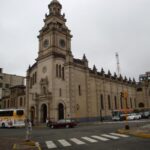


Government Palace of Peru: Casa de Gobierno and the Long Run of Power
Then you move to the Government Palace of Peru, also called Casa de Gobierno (and sometimes Casa de Pizarro). This is the executive power center and the official residence of the President of Peru, located in Plaza Mayor on the left bank of the Rímac River.
What makes this stop interesting is the time depth. Different buildings used for the same function have existed on nearly the same site for about five centuries, starting with Francisco Pizarro’s occupation in 1535. Before that, it may have been associated with the curaca Taulichusco, an Inca delegate in the Rímac Valley.
The building also connects to major historical figures beyond the colonial period. During the Viceroyalty it served as residence for the 40 viceroys of Peru, and later it housed liberators José de San Martín and Simón Bolívar, along with many presidents in the republican era.
So when you stand there, you’re not only seeing architecture. You’re seeing how political authority in Lima kept finding the same geographic center again and again.
Comfort on Wheels: Air-Conditioned, WiFi, and Phone Charging
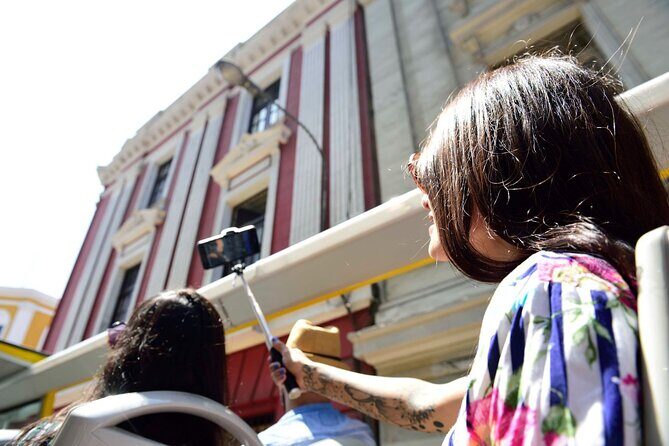
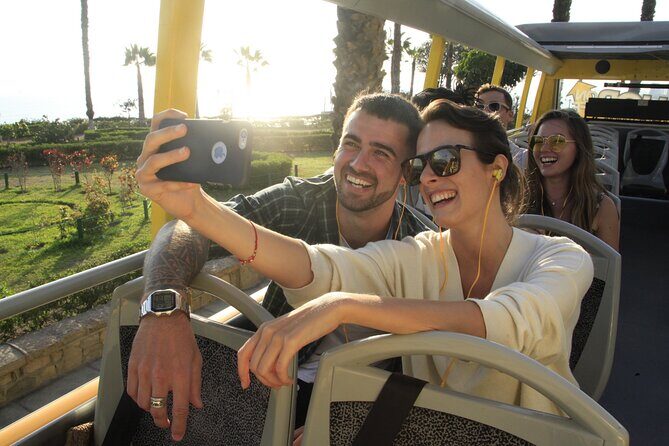
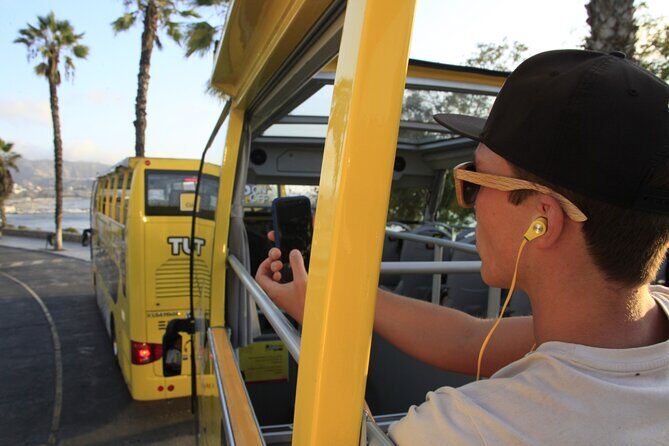
The tour is built around a mix of bus time and guided walking. The big practical win is comfort: you get an air-conditioned vehicle plus onboard WiFi. There are also USB chargers at seats, which is handy when you’re using maps, translating menus, or trying to grab sunset photos and your phone battery gives up.
One review-style issue that you should plan for: sometimes the bus microphone or sound system can be hard to hear. If you’re sitting farther back or near a noisy section, you might want to angle for clearer audio. And at each stop, don’t drift—pay attention when the group moves, because missing one person can happen when instructions are missed.
Timing and Traffic: A Real Lima Consideration
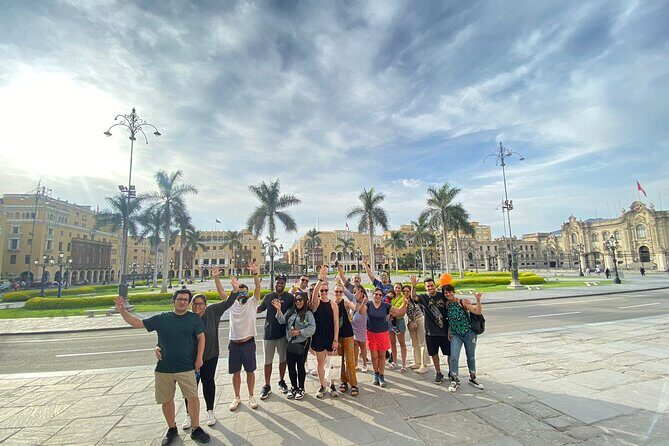
Lima traffic is no joke, and it can affect the feel of a short 4-hour tour. Even if everything goes well at the stops, the drive back toward Miraflores can take longer than you expect on congested roads.
Here’s how to use this information well: go in with flexible timing. If you have a tight dinner reservation right afterward, build in buffer. If you hate delays, this tour is still workable, but you’ll want to plan your evening like a local—slow and patient.
Price and Value: Is $35 a Good Deal for This Route?
At $35 per person for about four hours, this tour is strongest for people who want structure. You’re paying for guided explanations, transport via air-conditioned bus, and the convenience of not having to coordinate multiple stops yourself across Lima’s historic center.
The included perks matter. You get onboard WiFi, all fees and taxes, and USB phone chargers. You also get guided time in the center of Lima, plus entrance included to the convent of Santo Domingo as part of the program.
What’s not included is snacks, so don’t assume you’ll be covered with a bottle of water and a cookie. Also, there’s no pickup included. You’ll start at Turibus in Larcomar, so factor in how you’ll get there from your hotel.
In short: for first-timers and people who want a guided orientation in limited time, $35 can feel fair. If you already know Lima well and prefer independent pacing, you might not get as much out of the set route.
Who This Tour Fits Best (and Who Might Want Another Option)
This is a good match if you’re:
- In Lima for a limited time and want a fast orientation.
- Traveling with family and want a guided route without complicated logistics.
- Visiting historic central Lima for the first time and like clear context as you walk.
- Comfort-focused, since air-conditioning, WiFi, and USB charging reduce friction.
It’s also a solid choice if you’re the kind of traveler who enjoys learning the “how did this become this?” story—Inca sites, Spanish-era decisions, then centuries of government power.
You might choose differently if you:
- Hate any chance of delayed road time.
- Need audio clarity for every spoken word and rely on a microphone setup.
- Want total freedom to linger in one plaza or museum without group pacing.
Should You Book the Panoramic Bus Tour From Larcomar?
I’d book this if you want an efficient introduction to Lima that doesn’t skip the big names: Larcomar for the cliffside start, Pucllana for the Pre-Inka contrast, then Plaza de Armas, the Lima Cathedral area, and the Government Palace zone for the civic-and-religious core.
It’s also the right kind of tour when good guide performance matters. Recent experiences point to guides such as Bryan and Yoanna as a major reason the tour lands well—clear explanations, friendly energy, and an enjoyable walking component.
Book it when you can control the main variable: weather. If you can pick a day with decent conditions, you’ll get the best version of the experience. And once you’re in the group, do yourself a favor: stay close at each stop so you never wonder whether you’re still with the right set of people.
FAQ
What is the duration of the Lima city tour from Larcomar?
The tour lasts about 4 hours.
How much does the tour cost?
It costs $35.00 per person.
Where do I meet for the tour?
Meet at Turibus, Larcomar, Mal. de la Reserva 610, Miraflores 15074, Peru.
Is pickup from my hotel included?
No. Pickups are not included.
What’s included in the ticket price?
Included are WiFi on board, all fees and taxes, an air-conditioned vehicle, guided in the center of Lima, entrance to the convent of Santo Domingo, and USB chargers for phones.
Are snacks included?
No, snacks are not included.
Is WiFi available during the tour?
Yes. There is free WiFi on board.
Are phone chargers provided?
Yes. There are USB chargers for phones in the seats.
Is there a weather requirement?
Yes. The experience requires good weather. If it’s canceled due to poor weather, you’ll be offered a different date or a full refund.
Can I cancel for a full refund?
Free cancellation is available. You can cancel up to 24 hours in advance for a full refund.
Is the tour suitable for most travelers?
Most travelers can participate, and service animals are allowed.