REVIEW · LIMA
City Tour Panoramic Bus Departure From Larcomar
Book on Viator →Operated by TURIBUS · Bookable on Viator
Lima’s best views roll past fast. I like the panoramic bus comfort (WiFi and USB chargers) and the mix of modern Miraflores stops plus an official guided walk in the Historic Center. The main thing to plan for is time lost to Lima traffic, and some parts of the day can feel quick if you want slow, lingering visits.
Starting from Larcomar gives you an immediate sense of Lima’s geography. You’ll ride with a narration-style tour feel, then switch gears into feet-on-stone sightseeing around Lima’s grand plazas and churches, including Museo Santo Domingo with a guided visit.
In This Review
- Key things that make this tour work
- Starting at Larcomar: why the morning view matters
- Miraflores icons you’ll actually recognize
- Parque Kennedy and the two-park design
- The Pre-Inka Ceremonial Center: old beneath new
- Guinness-record fountains: the spectacle stop
- An 18th-century-style building linked to Gustave Eiffel
- Planning for the museum-and-art detour on the route
- Parque de la Exposición: big central green with multiple museums
- Plaza Grau and the naval walkway
- The Museum of Italian Art: one European art museum in Peru
- Entering Plaza San Martín and Jirón de la Unión
- Plaza San Martín: a UNESCO-listed plaza
- Jirón de la Unión: the old aristocratic street vibe
- Plaza de Armas: where Lima’s power and faith share a block
- The Cathedral of Lima and the Government Palace: what to look for
- Cathedral of Lima: built on a deeper foundation
- Government Palace of Peru: Casa de Pizarro to the present
- Museo Santo Domingo: the guided part that adds real depth
- Price, comfort, and timing: does $35 feel fair?
- The main drawback: traffic and pace
- My quick advice: who should book this and who should skip
- Should you book this Lima panoramic bus and Historic Center tour?
- FAQ
- How long is the tour?
- How much does it cost?
- Where does the tour depart from in Miraflores?
- What is included in the price?
- Which museum visit is included?
- Do you spend time walking in the Historic Center?
- Is there WiFi and phone charging onboard?
- Can I cancel for a full refund?
- How many people are on the tour?
- Are service animals allowed?
Key things that make this tour work
- Larcomar cliff views first: you get the Miraflores coastline vibe right away.
- A set, guided Historic Center walk: you’re not left guessing where to go.
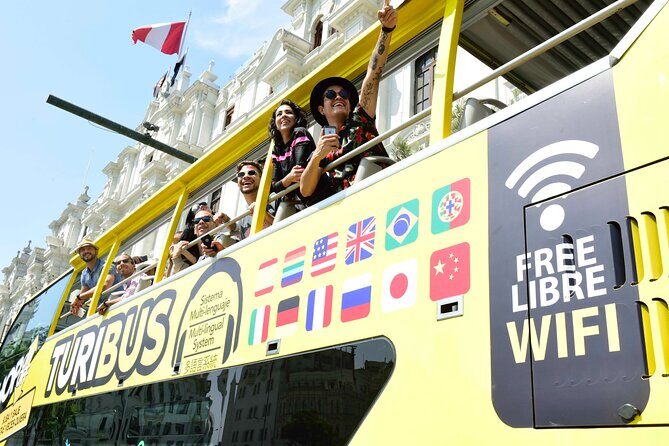
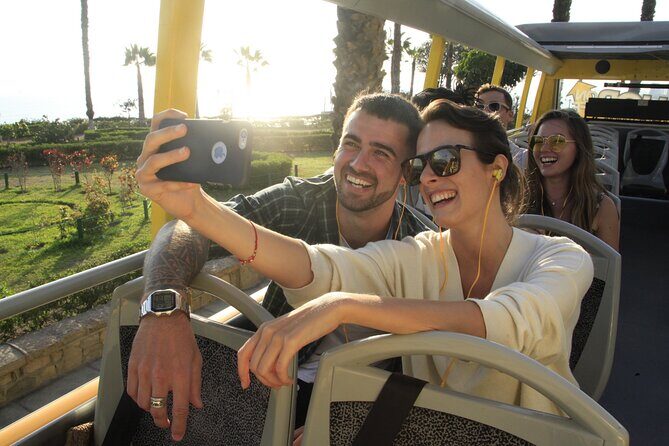
- WiFi and USB chargers onboard: useful for maps, photos, and battery anxiety.
- Miraflores variety: parks, a Pre-Inka ceremonial site, and Guinness-record fountains.
- Museum time included: Museo Santo Domingo has an actual guide, not just a stop sign.
- Small group by bus standards: capped at 40 travelers.
Starting at Larcomar: why the morning view matters
The tour begins at Miraflores’ Malecón de la Reserva area, at Larcomar. This isn’t just a mall with a view. Larcomar is built on an excavation at the top of a Lima cliff, with many spaces hovering over open air, which is why it feels floating and dramatic.
What I like about starting here: you get oriented fast. From the top of the cliffs, Lima’s layout makes more sense—coast, neighborhoods, and the way the city stretches inland. If you’ve been staring at a map, this early stop helps you connect the dots before you hit the Historic Center.
Larcomar also has a clever infrastructure detail that’s worth noticing. The underground ventilation is handled with large exhaust chimneys, which show up in the park as large bluish glass sculptures. It sounds technical—then you see it, and it clicks.
One practical note: this is a cliff area. If it’s windy or bright, sunglasses and water help. The tour is only about 4 hours, so little comfort stuff matters.
Other Lima city tours we've reviewed in Lima


Miraflores icons you’ll actually recognize
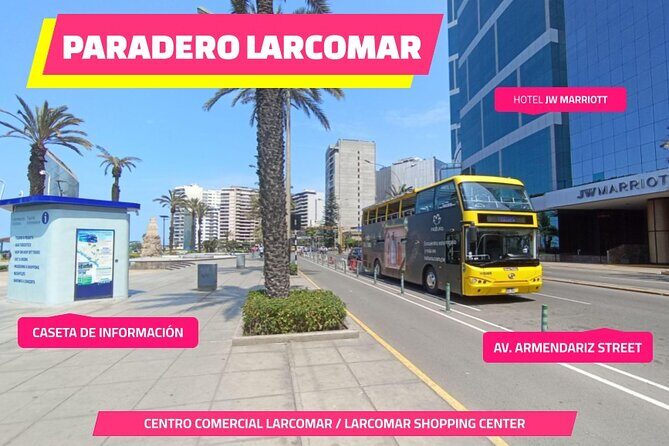
Once you’re past Larcomar, the day leans hard into Miraflores, and that’s a smart choice. Miraflores is where many hotels are, and it’s also a place that’s designed for people to walk, shop, and take photos. You’ll move through several landmark stops rather than one long single-focus site.
Parque Kennedy and the two-park design
A highlight is the Central Park of Miraflores—known as Parque Kennedy, plus the neighboring Parque 7 de Junio. Together they form two parks in a single green space totaling about 22,000 m². The value here isn’t only scenery. It’s that the park sits in the middle of Miraflores life, so you get a feel for the neighborhood’s energy without needing hours of exploring.
You can treat this like a pause button. Take quick photos, stretch your legs, and use the moment to reset before the more museum-and-history heavy part of the day.
The Pre-Inka Ceremonial Center: old beneath new
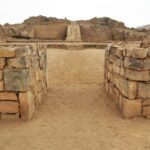
Miraflores also has an important pre-Inka site: the Magnificent Pre-Inka Ceremonial Center. This stop changes the rhythm of the tour in a good way. Lima isn’t only colonial churches and civic plazas. You’re seeing layers of settlement and ritual spaces before the Inca period.
Because time is limited, you probably won’t get a deep archaeological lecture. Still, the fact that this exists inside a modern district is the point—Lima’s past doesn’t stay in one museum box.
Guinness-record fountains: the spectacle stop
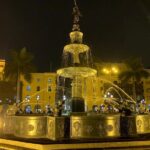
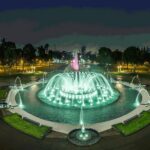
Next up: the Park of Cybernetic Water Fountains, famous for a Guinness record tied to the fountain jet with the highest reach in the world. Even if you’re not the type who chases records, it’s a fun visual break in the middle of history stops.
This is also the easiest place to take a bunch of photos quickly—just watch your footing if the area is slick.
Other Chorrillos and coastal Lima tours in Lima





An 18th-century-style building linked to Gustave Eiffel
You’ll pass by a striking 18th-century building associated with Gustave Eiffel. In this area, the stop is more about architecture and what’s inside than about getting a long structured tour of every room. It’s a strong contrast to the more traditional buildings you’ll see later in the Historic Center.
If you care about design, keep your phone camera ready. The exterior elements (including a corner tower and façade details in related buildings) tend to reward quick looks.
Planning for the museum-and-art detour on the route
As the route moves onward, you’ll also encounter more cultural stops that help you understand modern Lima beyond its colonial core.
Parque de la Exposición: big central green with multiple museums
Parque de la Exposición is in central Lima and was inaugurated in 1872. The park is bounded by major avenues and includes a cluster of museums in its grounds, including the Museum of Art of Lima (in the Palacio de la Exposición) and other museum spaces.
The practical value of seeing this from the tour route is timing. You’re not spending extra transport time searching for the right museum complex. You’re getting the mental map now, and you can decide later if you want to return.
Plaza Grau and the naval walkway
You’ll also pass by or stop around civic squares named for Peru’s naval history. Plaza Grau is named for Miguel Grau Seminario, linked to the Huáscar monitor during the Pacific War. The Paseo de los Héroes Navales commemorates the centenary of the Angamos combat.
This part matters if you’re trying to connect place names to events. Lima’s streets and squares act like shortcuts through national memory.
The Museum of Italian Art: one European art museum in Peru
The Museum of Italian Art is housed in a Neo-Renaissance-style building and features bronze and marble sculptures, paintings, and ceramics by more than 120 Italian artists from the early 20th century. The tour route includes it as a stop, and the fact that it’s described as the only European art museum in the country makes it a standout category-wise.
Even if you only get a short look during the tour day, you’ll still come away with one clear takeaway: Lima’s cultural identity isn’t locked to one era. It’s mixed, layered, and influenced by migration and taste.
Entering Plaza San Martín and Jirón de la Unión
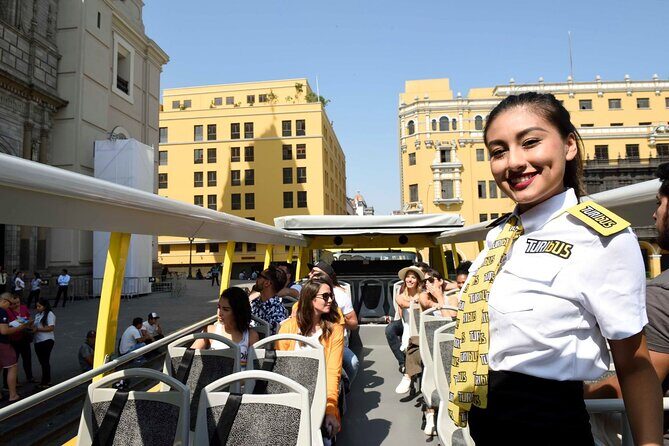
After the bus portion, you’ll shift into the Historic Center, and that’s the heart of the day for most people. The walking component is guided by an official tour guide, and it’s timed in pieces so you get key civic visuals without feeling like you’re trapped in a single long slog.
Plaza San Martín: a UNESCO-listed plaza
Plaza San Martín is a public space in the historic center on Avenida Nicolás de Piérola. In 1988, it was declared a UNESCO World Heritage Site, and it’s considered one of the most representative public spaces in Lima.
You don’t spend forever here, but it’s a good starting “stage set.” It frames the historic core so you can better understand what comes next.
Jirón de la Unión: the old aristocratic street vibe
Jirón de la Unión is the classic central-city street on the Damero de Pizarro grid. For years it was Lima’s most important and most aristocratic street, packed with well-known local connections.
In a short guided walk, the value isn’t only what’s there physically. It’s learning why this street mattered. That context turns the walk from random sightseeing into a story you can follow.
Plaza de Armas: where Lima’s power and faith share a block
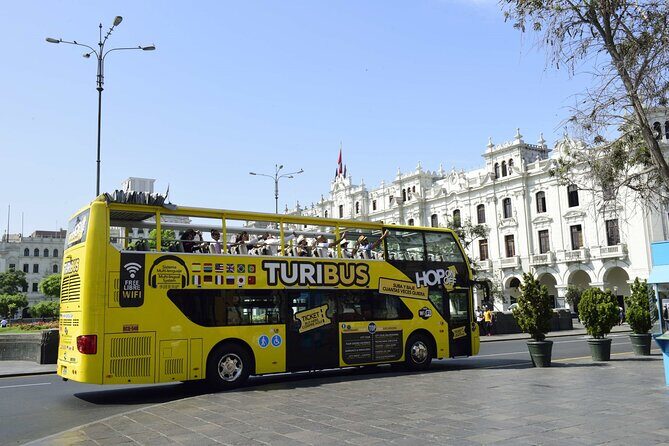
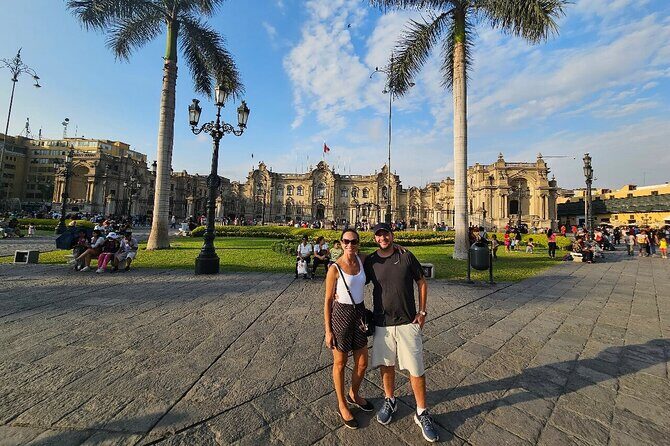
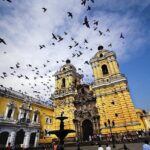
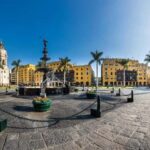
Then you reach Plaza de Armas, also called Plaza Mayor, the founding site of Lima. This is the central public space, and around it you’ll find the big hitters: the Government Palace, the Cathedral of Lima, churches, and other civic buildings.
The tour pacing here is usually quick—think minutes rather than an hour—so I recommend you pick your priorities before you arrive. If your focus is photos, choose angles early. If your focus is architecture and symbolism, watch the buildings as if they’re characters in the city.
A key detail you’ll get with a guide: the plaza is crossed by multiple streets (Jirón Junín, Jirón de la Unión, Jirón Huallaga, and Jirón Carabaya). That street grid is how Lima distributes movement. When you know that, you don’t feel lost.
The Cathedral of Lima and the Government Palace: what to look for

These two stops do a lot of heavy lifting in a short time.
Cathedral of Lima: built on a deeper foundation
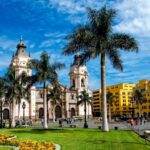
The Cathedral of Lima was built on a site tied to an Inca shrine and a palace of a Cusco prince (Sinchi Puma’s line is referenced). When Lima was founded, Francisco Pizarro assigned land to the church, and the story includes Sinchi Puma renouncing assets on paper so the church occupation wouldn’t be seen as usurpation.
Construction details are part of the tour narration too: Pizarro laid the first stone in 1535, and the first cathedral was completed in 1538, inaugurated in 1540 under the dedication of Our Lady of the Assumption. For me, the value is that it turns the cathedral from a photo stop into a timeline.
Government Palace of Peru: Casa de Pizarro to the present
The Government Palace is Peru’s main executive seat and also the official residence of the President of Peru. The tour explanation connects it to the centuries of layered use: it has been occupied by Pizarro in 1535, later became the viceregal palace during the viceroyalty (residence of 40 viceroys), and later housed figures like José de San Martín and Simón Bolívar.
In other words, you’re standing in a building that’s been a center of authority for nearly five centuries. That’s why people slow down here even when the tour is moving.
Museo Santo Domingo: the guided part that adds real depth
Museo Santo Domingo is the main indoor anchor of the Historic Center portion, and it’s also where the tour adds value beyond a quick walk-by.
What you’re getting with the included ticket is a guided service during the visit. That matters because Santo Domingo isn’t only about the outside view. It’s a museum space described as using dialogue with art and other visitors to connect you with cultural traditions over thousands of years.
In a 4-hour tour day, this kind of guided museum time is a win. The bus and street stops give you breadth. The museum gives you one place to focus and absorb.
If you’re the type who gets bored when everything is just outside photos, Santo Domingo is the moment that can change your whole impression of the tour.
Price, comfort, and timing: does $35 feel fair?
At $35 per person for about 4 hours, this tour is priced like a budget-friendly orientation. The reason I’d call it good value is that it bundles a few things that otherwise cost time and money:
- entrance ticket to the panoramic bus,
- entrance ticket to Museo Santo Domingo,
- a guided service in the Historic Center with an official tour guide,
- a guided service during the museum visit,
- plus onboard perks like WiFi and USB chargers.
On top of that, the group limit is 40 travelers. It’s not a huge crowd where you’re constantly separated or waiting at every step.
The main drawback: traffic and pace
The biggest risk isn’t the tour content. It’s Lima’s traffic. Some days you’ll sit in traffic and feel like the bus narration slows down. Also, when conditions change in the Historic Center (crowds, security adjustments, or protests), the walking route can shift and you might have to follow faster, walk a bit more, or miss a portion of the planned museum time.
You can’t fully control that. What you can control is your mindset: treat this as an introduction, not as a slow, private museum day.
My quick advice: who should book this and who should skip
This tour is a strong fit if you want:
- a fast overview of Miraflores and central Lima in one go,
- an official guide for the Historic Center so you don’t waste time figuring it out,
- a museum visit with an included ticket,
- and simple onboard comfort so you’re not worn out before you start walking.
You might want to skip or upgrade if you:
- hate guided pacing and want to wander freely on your own schedule,
- need a guaranteed slow walk with lots of museum time,
- or are sensitive to time lost in city traffic.
One more smart tip: bring water and keep your expectations flexible. Some departures run during hotter daytime hours, and a short guided walk feels longer when you’re dehydrated.
Should you book this Lima panoramic bus and Historic Center tour?
Book it if you’re arriving with limited time and want a practical first day plan. The combination of Miraflores landmarks (Larcomar, Parque Kennedy, fountains, Pre-Inka ceremonial site) plus the guided Historic Center walk (Plaza San Martín, Jirón de la Unión, Plaza de Armas, Cathedral, Government Palace) makes this a high-efficiency way to get your bearings fast.
Skip it if you already know you want deep, slow study of one museum or one neighborhood. In that case, you’ll likely prefer a focused private guide or a longer independent itinerary.
If you book, go in with patience for traffic and a flexible plan for how long any one stop feels. When conditions cooperate, this tour delivers a lot of Lima in a short window.
FAQ
How long is the tour?
The tour lasts approximately 4 hours.
How much does it cost?
It costs $35.00 per person.
Where does the tour depart from in Miraflores?
The start meeting point is Mal. de la Reserva 616, Miraflores 15074, Peru, and the ticket redemption point is Turibus at Mal. de la Reserva 610, Miraflores 15074, Peru.
What is included in the price?
It includes all fees and taxes, WiFi on board, USB chargers, a panoramic bus entrance ticket, an official guided service in the Historic Center of Lima, entrance ticket to Panoramic Bus, and entrance ticket plus guided service during the visit to Museo Santo Domingo.
Which museum visit is included?
The tour includes Museo Santo Domingo, with both the entrance ticket and guided service.
Do you spend time walking in the Historic Center?
Yes. The Historic Center portion includes a guided walk with stops such as Plaza San Martín, Jirón de la Unión, and Plaza de Armas, plus Cathedral and Government Palace area time, and a museum visit.
Is there WiFi and phone charging onboard?
Yes. WiFi is available on board, and there are USB chargers for phones in all seats.
Can I cancel for a full refund?
Yes. Free cancellation is available up to 24 hours in advance for a full refund.
How many people are on the tour?
The tour has a maximum of 40 travelers.
Are service animals allowed?
Yes, service animals are allowed.
If you want, tell me your travel dates and whether you’re more into architecture, museums, or photo stops, and I’ll suggest the best way to pace Lima around this 4-hour window.