REVIEW · LIMA
Lima Historic Center Tour and Pisco Tastings
Book on Viator →Operated by Lima América Tours · Bookable on Viator
Lima’s historic center plays like a live stage. This tour links key sights in the Lima Damero with Pisco and cocoa tastings, plus viewpoints that show how the city sits along the Rímac River.
What I like most is the mix of places you’d never pick randomly (like Casa O’Higgins and Casa de la Literatura) and the way the itinerary keeps returning to major squares and facades so you get your bearings fast. Also, the licensed guides work in both English and Spanish, which really helps when you want details without a language hurdle.
One thing to consider: the $72 price is for the tour itself, while the pisco sour and cocoa tastings are listed as a separate $7 add-on, and there’s at least one note about Pisco tastings not happening on the day for a past participant.
Quick highlights before you book
- A UNESCO square on the route: Plaza San Martín was declared a World Heritage Site in 1988.
- Baroque façade stop: Iglesia y Convento La Merced (built in 1535) is a Churrigueresque Lima baroque example.
- Literature in a former rail setting: Casa de la Literatura Peruana operates at Desamparados Station and is free.
- Chocolate + Peruvian cocoa flavors at ChocoMuseo, with tastings tied to the experience.
- Big-city views without the stress at Alameda Chabuca Granda and the Rimac bridges.
- San Cristóbal + llama feeding at Parque de la Muralla, with photos built into the stop.
In This Review
- Where This Tour Starts: Gran Hotel Bolívar to Lima’s Historic Grid
- Plaza San Martín and Jirón de la Unión: UNESCO Square to Old Lima’s Main Street
- La Merced and Casa O’Higgins: Baroque Limeño Style Meets Independence Memory
- Plaza de Armas: Lima’s Founding Square and Its Who’s Who
- ChocoMuseo and Casa de la Literatura: Food and Culture Without the Museum Fatigue
- Alameda Chabuca Granda and San Francisco de Asís: Views Along the Rimac
- Parque de la Muralla and San Cristóbal Hill: Panoramas, Llamas, and a Different Lima
- Price and What’s Actually Included: Is $72 Good Value?
- Who Should Book This Tour (and Who Might Prefer More Time)
- Should You Book This Lima Historic Center and Pisco Tasting Tour?
- FAQ
- How long is the Lima Historic Center Tour and Pisco tastings?
- How much does the tour cost?
- How big are the groups?
- What language is the guide?
- Is pisco sour included in the tour price?
- Are cocoa tastings included?
- Where do I meet and where does the tour end?
- Are tickets required for the stops?
- What food is provided?
Where This Tour Starts: Gran Hotel Bolívar to Lima’s Historic Grid
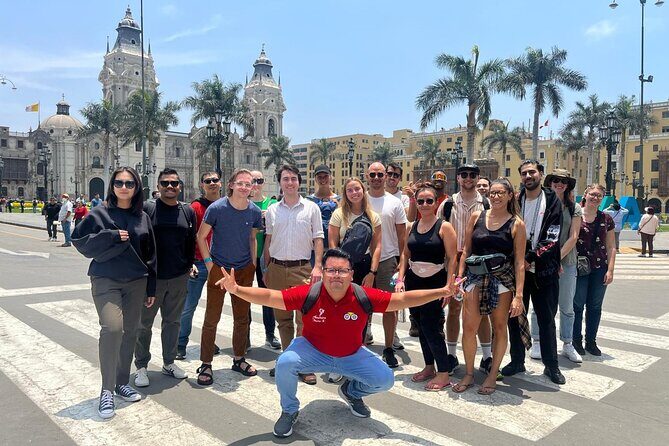
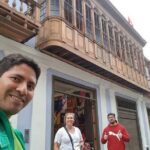
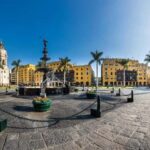
You’ll meet at Gran Hotel Bolivar Lima, right on Jirón de la Unión (958). That matters because Jirón de la Unión is the spine of the historic center’s old street plan, the Damero de Pizarro area. In plain terms: it’s where Lima’s layout starts to make sense, and it’s an easy neighborhood base for walking.
This is a group tour capped at 30 people, and it lasts about 2 hours 20 minutes. With that timing, you should expect short, focused stops rather than lingering for long museum-style viewing. If you like quick orientation plus a few memorable moments (like tastings and viewpoints), this format works well.
Also, the tour runs in English and Spanish with a licensed professional guide through Lima América Tours. The best part of a guided route in a place like Lima is knowing what you’re looking at. Here, you’re not just moving from church to church—you’re getting the “why” behind each location.
Plaza San Martín and Jirón de la Unión: UNESCO Square to Old Lima’s Main Street
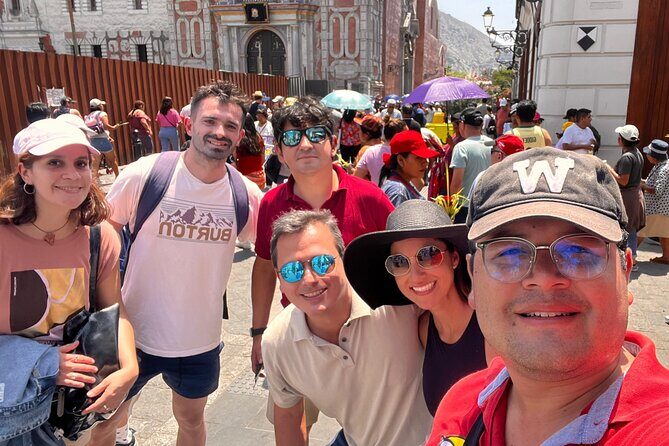
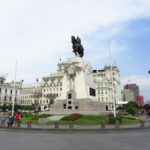
The first major stop is Plaza San Martín. This public square sits on Nicolás de Piérola Avenue (the former Colmena Avenue) in the historic center. It became a UNESCO World Heritage Site in 1988, and it’s an easy win for your first moments in Lima: the scale is clear, the setting is historic, and the guide can connect it to the rest of the city grid.
From Plaza San Martín, the tour ties into the story of Jirón de la Unión. For years, this street was the city’s most important and most “aristocratic” address, where the most famous people gathered. Later, as the historic center deteriorated, its role turned more commercial. Then, starting around 2005, plans to revalue the historic center helped it regain importance—and by 2013 it was selected as one of Latin America’s priciest streets by Colliers International. That’s a big theme in one corridor: how a city changes without losing its shell.
You’ll also hear why this square is more than a pretty meeting spot: its central monument pays tribute to José de San Martín, which gives the plaza a clear emotional anchor for the route.
Other historic center and catacombs tours in Lima
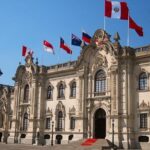
La Merced and Casa O’Higgins: Baroque Limeño Style Meets Independence Memory
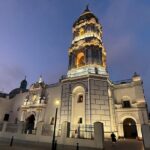
Next up is Iglesia y Convento La Merced. This complex is tied to early colonial Lima: it was built in 1535 by Brother Miguel de Orenes, with the Archangel San Miguel as its owner. The façade is especially worth seeing because it’s described as a finished example of Churrigueresque Lima baroque style—meaning ornate, dramatic, and made to be stared at.
The guide point here is practical: baroque façades can look like decoration until someone explains the structure and symbolism. You’ll see the niche where the Virgen de las Mercedes appears, surrounded by other images. And this basilica has an additional layer of meaning since the patroness of the Armed Forces of Peru is venerated here.
After that, you’ll step into Casa O’Higgins, a colonial-style building on Jirón de la Unión just a few meters from Plaza de Armas. Since 2008, it has functioned as a cultural center run through the Pontifical Catholic University of Peru, with a permanent space dedicated to Bernardo O’Higgins. If you like independence-era context, this stop adds a human story to the architecture.
Both of these stops are short, but they work because they keep shifting your focus: from street power to façade detail to a person-centered memory house.
Plaza de Armas: Lima’s Founding Square and Its Who’s Who
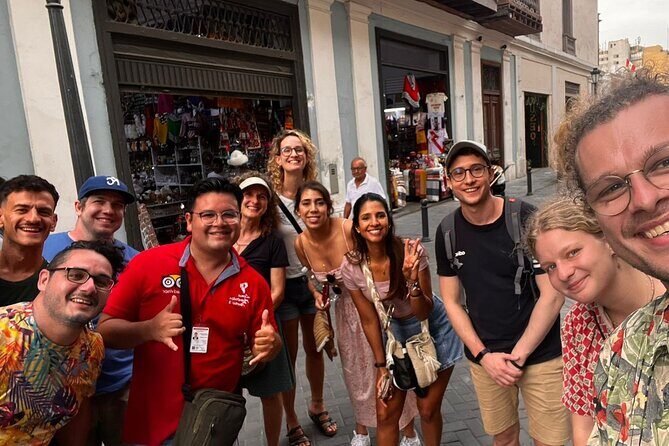
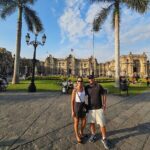
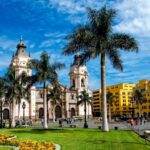
The heart of the tour is Plaza de Armas (Plaza Mayor of Lima), where the city is described as founded. This is your big orientation moment: once you understand this square, the rest of the historic center falls into place faster.
The tour guide will explain the surrounding power buildings, including the Government Palace and the Cathedral of Lima, plus nearby institutions such as the Church of the Sagrario, the Archbishop’s Palace, and the Municipal Palace. Even the Club de la Unión faces into the square, reinforcing how concentrated authority and civic life are here.
You’ll also learn how the plaza connects to the street web. It’s crossed by several jirones (Junín, Unión, Huallaga, and Carabaya), which is a helpful detail because Lima’s neighborhoods often feel like they hinge on these connecting corridors.
This stop is the longest in the center of the route—about 30 minutes. Use that time to do two things: (1) look at the facades for contrast, and (2) pick one angle that shows both the plaza’s open space and the buildings that frame it.
ChocoMuseo and Casa de la Literatura: Food and Culture Without the Museum Fatigue
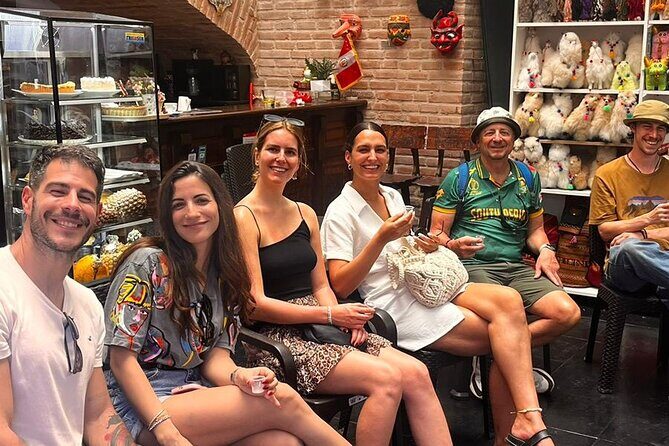
A lot of historic-center tours get stuck on churches. This one adds a pair of cultural stops that keep the pacing from getting stale.
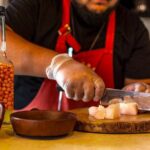
First is ChocoMuseo. The guide enters the chocolate museum to explain Peruvian cocoa and its flavors, then offers tastings. You’ll hear about benefits and multiple presentations, which is useful because “cocoa” can mean a lot more than the bar at home. This is also a practical break from standing outdoors, and it gives you something to do with your hands and senses beyond photos.
Then comes Casa de la Literatura Peruana in the Desamparados Station area. This is a public cultural center inaugurated on October 20, 2009. It’s tied to the Ministry of Education through the Vice Ministry of Pedagogical Management, and the mission is to spread knowledge of Peruvian literature and support national literary production. The key practical detail: admission and services are free because it belongs to the Ministry of Education.
If you’re thinking about value, these two stops help you get more “Lima meaning” per hour. You leave with taste memories (cocoa) and a feel for what the country prioritizes (literature), not just sightseeing checkmarks.
Alameda Chabuca Granda and San Francisco de Asís: Views Along the Rimac
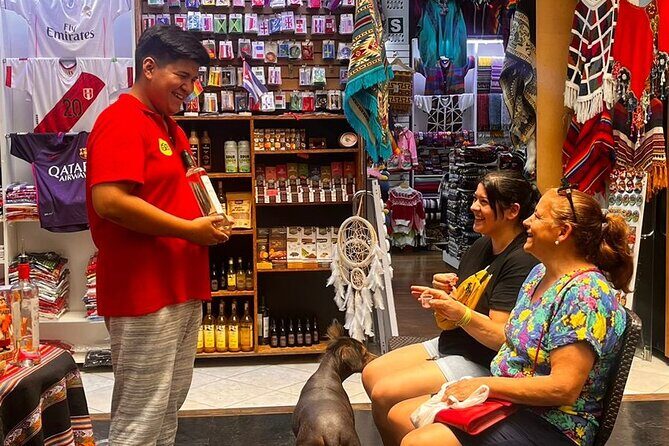
After the cultural stops, you shift to the outdoor viewpoint side of Lima.
Alameda Chabuca Granda is a viewpoint adjacent to the Government Palace and on the banks of the Rímac River. From here you can see the old Rímac neighborhood, San Cristóbal hill, and the Desamparados Train Station. On a clear day, the view expands to bridges like the Stone Bridge and the Rayitos de Sol Bridge, plus a broad horizon of viceregal mansions.
This stop also has a built-in “why it exists” factor: the area includes three amphitheaters and stages for varieties and Creole music. Even if you’re not there for an event, that design tells you how Lima likes to celebrate in public spaces.
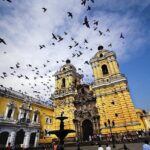
Then you visit Iglesia San Francisco de Asis, also called San Francisco the Great or San Francisco de Jesús. It’s a monumental basilica and convent complex. It’s part of a larger religious grouping that also includes Nuestra Señora de la Soledad Sanctuary and the Church of the Miracle. One of the most helpful facts you’ll get is tied to scholar Ramón Menéndez Pidal, who highlighted the monument’s scale and significance from the conquest era. It’s a reminder that this isn’t just a church stop; it’s about how the city shaped itself in the early colonial period.
Expect another short, guided look. If you want to read every carving up close, you’ll need a return trip later, but for orientation and first impact, this works.
Other Lima food tours we've reviewed in Lima
Parque de la Muralla and San Cristóbal Hill: Panoramas, Llamas, and a Different Lima
The final stop is Parque de la Muralla, a wall park. This is where the route broadens beyond the most polished facades into how the city lives. The guide gives a panoramic explanation of San Cristóbal hill and references local favelas. That context matters because Lima’s historic center doesn’t exist in isolation—it’s part of a larger urban reality.
Then you get the fun part: a small llama zoo. You’ll have the chance to feed the llamas and take photos. That’s not a random add-on; it’s a kid-friendly and adult-relaxing moment to end the day without feeling like you’ve been walking nonstop.
Photo tip: this is one of your best chances for wide city shots. Keep your phone charged and your patience ready, because viewpoints and photo timing always attract the crowd.
Price and What’s Actually Included: Is $72 Good Value?
The base price is $72 per person, and the tour includes the licensed professional guide (English and Spanish) and all fees and taxes. The duration is about 2 hours 20 minutes, and the group size is capped at 30, which helps you get questions answered.
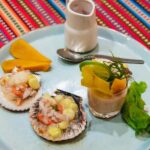
Where value gets slightly tricky is the tastings and water. The information lists pisco sour tastings and Peruvian cocoa tastings as offered for $7, and bottled mineral water is listed for $2. So, if you take everything listed, you’re likely adding about $9 on top of $72. Still not bad for a guided route that includes a museum-style cocoa stop and an end-of-tour tasting focus.
Two quality signals stand out from the overall rating: the guide performance scores extremely well, with a 4.9 rating from 17 reviews, and recommendation is 100% in the available feedback. The one real caution is about Pisco tastings. At least one past participant noted they did not get the Pisco tasting on their day even though it’s part of what’s offered. I’d treat that as a “confirm on the spot” moment: ask when the tasting will happen and what’s included in your specific group’s schedule.
Also remember tipping isn’t included, so budget for that if you want to do the decent thing.
Who Should Book This Tour (and Who Might Prefer More Time)
This tour is a strong fit for you if you want:
- A guided walk through Lima’s core sights in a short time window
- A mix of architecture plus cultural stops (chocolate and literature)
- City views that explain the geography of Lima and the Rímac
- An ending with something playful like llama feeding
It may not suit you if you want long time inside churches, deep museum reading, or a slower pace. The stop durations are brief (for example, several stops run around 10 minutes, with Plaza de Armas longer). You’ll see a lot, but you won’t sit for long.
If you’re a food-minded traveler, the cocoa tasting is the most dependable “sensory payoff” built into the plan. For the pisco side, it’s listed, but I’d verify timing during the tour because of that one negative note.
Should You Book This Lima Historic Center and Pisco Tasting Tour?
I’d book this if your goal is fast, guided clarity: you want to understand why Lima’s historic center looks the way it does, then break it up with cocoa tastings and scenic stops. The combination of Plaza San Martín (UNESCO), La Merced baroque detail, Plaza de Armas power-squares, and a San Cristóbal viewpoint with llama feeding is a solid set of experiences for $72.
I’d think twice only if you’re specifically chasing pisco tastings as the main event. If that’s your priority, plan to ask the guide directly when the tasting will happen and how it’s handled for your group. Otherwise, this is an excellent way to orient yourself in Lima’s center and leave with more than photos.
FAQ
How long is the Lima Historic Center Tour and Pisco tastings?
It runs for about 2 hours 20 minutes (approx.).
How much does the tour cost?
The price is $72.00 per person.
How big are the groups?
The tour has a maximum of 30 travelers.
What language is the guide?
The guide is licensed and works in English and Spanish.
Is pisco sour included in the tour price?
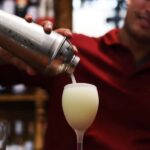
Pisco sour tastings are listed as offered for $7, so you’ll likely pay that add-on if you want to taste.
Are cocoa tastings included?
Per the tour information, Peruvian cocoa tastings are offered for $7, alongside the pisco sour tasting.
Where do I meet and where does the tour end?
You start at Gran Hotel Bolivar Lima, Jirón de la Unión 958, Lima 15001, Peru, and the tour ends back at the same meeting point.
Are tickets required for the stops?
The stop descriptions provided indicate free admission tickets for the listed places.
What food is provided?
Lunch and snacks are not included, but you can expect tastings and bottled water for listed prices.