REVIEW · LIMA
Private Tour in Miraflores and Barranco
Book on Viator →Operated by Inca Trilogy Tours · Bookable on Viator
Miraflores and Barranco feel made for strolling. This private route mixes big landmark energy with photo-friendly cliff views and patient, accommodating guiding, so you get context without losing time. I also like the smart pacing: about 30 minutes at each stop, which keeps the 4 hours moving but not frantic. One possible drawback: it’s a fixed list of highlights, so if you want long hangs in a single neighborhood, you may feel a bit time-compressed.
You’ll travel with private transportation and an official tourism guide, plus entrance fees for the stops along the way (the itinerary notes admission tickets as free). At $90 per person, it’s not a budget “grab and go” deal, but it can be good value because you’re paying for guide time and logistics, not a pile of paid attractions. If you want pickup from outside the mentioned area, there’s an added $10 each way, and you’ll need to handle your own food.
In This Review
- Key Highlights You’ll Actually Use
- Miraflores First, Barranco Next: How This Route Feels
- Parque Kennedy: Starting at the Social Center of Miraflores
- Faro La Marina on the Malecón Cisneros: Lighthouse + Eiffel-Level Story
- El Parque del Amor: The Cliff, the Coast, and El Beso
- Larcomar: Shopping Center Time That Doesn’t Feel Like a Trap
- Chabuca Granda Monument and La Ermita: Music Meets a Quiet Church Corner
- Bajada de los Baños: Street Art Walk With Real Neighborhood Energy
- Puente de los Suspiros (1876): A Romantic Bridge With a Local Tradition
- The Final Pacific Ocean Viewpoint: Ravine Walk and Small Houses
- Price and Value: Is $90 Per Person Worth It?
- Who Should Book This Private Miraflores and Barranco Tour
- Should You Book This Tour?
- FAQ
- How long is the Private Tour in Miraflores and Barranco?
- Is this a private tour?
- What is included in the $90 per person price?
- Are entrance tickets covered?
- Is pickup included?
- Is food included?
- What should I do if the weather is poor?
- What is the cancellation deadline for a full refund?
Key Highlights You’ll Actually Use
- Kennedy Park as your orientation point: a central start with the church and municipal buildings in the middle of everyday life
- Faro La Marina with the Gustave Eiffel connection: a lighthouse on the Malecón Cisneros tied to the French artist’s legacy
- El Parque del Amor for coastline photos: cliff views plus the El Beso sculpture by Víctor Delfín
- Larcomar at the junction of views and people: under Salazar Park near Larco Avenue, easy to mix with browsing
- Bajada de los Baños street art: Barranco’s walls getting better as the neighborhood grows
- Puente de los Suspiros and a Pacific viewpoint finale: romantic history, then a ravine walk down toward the ocean
Miraflores First, Barranco Next: How This Route Feels
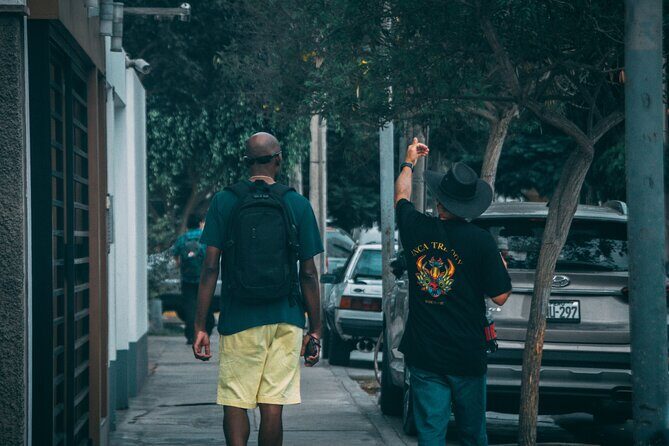
This tour is designed to help you get your bearings fast. You start in Miraflores, a neighborhood where the streets and the viewpoints make it easy to see Lima’s modern coastline mood. Then you shift to Barranco, where the vibe turns more creative and artsy, with street art and small corners that feel more personal.
It’s private, so it’s built for your group’s pace rather than a packed crowd rhythm. The itinerary is split into 8 stops, with about 30 minutes at each one. That format works well here because many of the “wow” moments are tied to short photo windows and small walks—especially along the cliffs and the Malecón.
If you like guided structure—someone pointing you toward the best angles, explaining what you’re seeing, and keeping you moving—this style fits nicely. If you’d rather roam freely without someone else holding the schedule, you might feel the clock.
Other Miraflores tours we've reviewed in Lima



Parque Kennedy: Starting at the Social Center of Miraflores
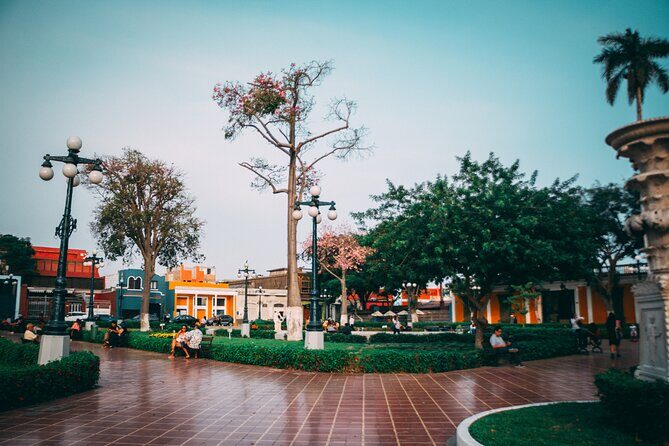
Stop 1 is Parque Kennedy, one of Miraflores’ emblematic public spaces. The setting is more than just a park. It sits right in the area that includes the main church and the municipality, which means you’re starting in a place that already matters to daily life: community events, cultural activities, and local fairs.
Why this start works: it gives you a reference point. After 10 minutes of orientation, the rest of the day makes more sense—especially when you head toward the Malecón and the coastline views. You also get a quick “feel” for Miraflores’ energy: this isn’t a remote overlook; it’s a hub.
What to expect in practical terms: you’ll have about 30 minutes, which is enough time to take in the surroundings and ask questions without feeling rushed. The admission note is free here, so you’re not paying to get your bearings.
Faro La Marina on the Malecón Cisneros: Lighthouse + Eiffel-Level Story
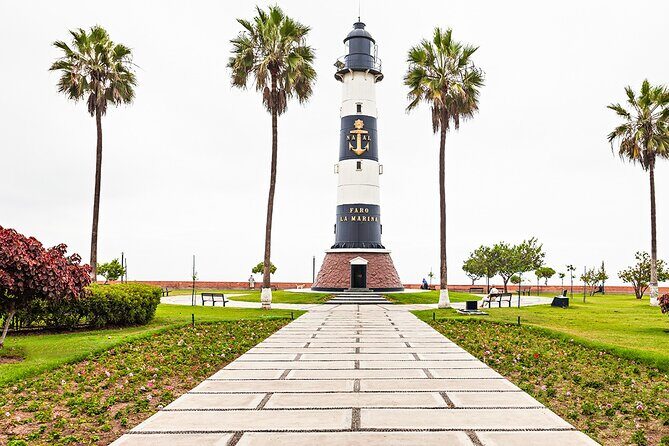
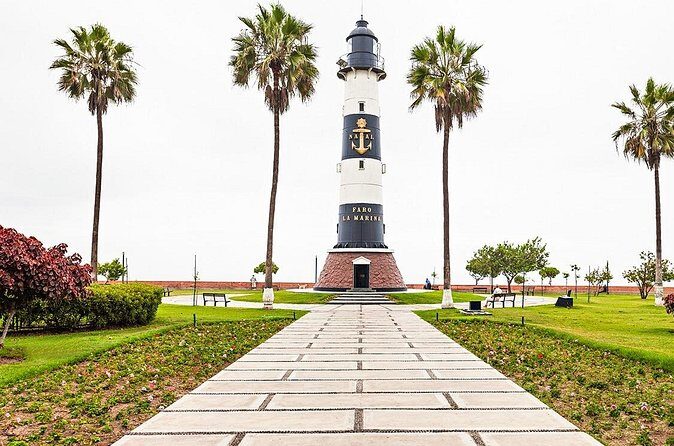
Next you go to Faro La Marina, the marina lighthouse on the Malecón Cisneros. This is one of those places where the scenery is good, but the added context makes it better. The itinerary notes that the Malecón Cisneros design is tied to the French artist Gustavo Eiffel, famous for the tower that carries his name.
Even if you don’t care about architecture trivia, the point of this stop is simple: you’re seeing how Lima’s coastline got shaped by recognizable design influences. With the guide, you’re not just photographing a lighthouse—you’re learning why the structure and setting feel the way they do in this part of the city.
Photo-wise: lighthouses are naturally photogenic, and the Malecón setting gives you a broader composition than a lone object would. The time allocation is again about 30 minutes, so you’ll want to use that window to grab both wide shots (lighthouse + waterfront feel) and closer frames.
El Parque del Amor: The Cliff, the Coast, and El Beso
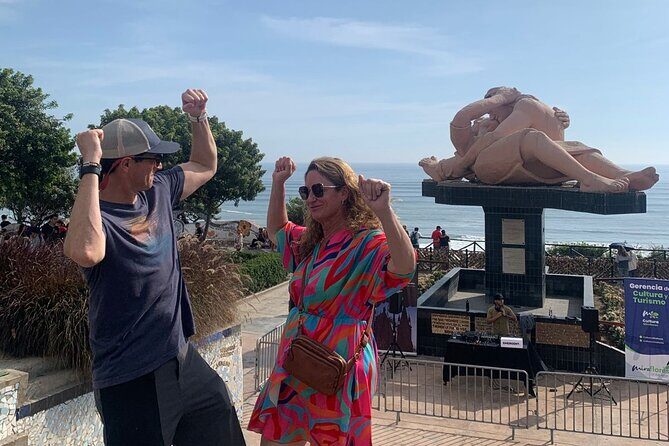
Stop 3 is El Parque del Amor, often described as Lima’s romantic park, built on the cliff. It’s the kind of place you can instantly understand from the viewpoint alone: Pacific coastline views, plus the key attraction—the monument symbol of love called El Beso by Peruvian artist Víctor Delfín.
This stop is one of the best reasons to do a guided route instead of rushing it on your own. The guide helps you frame what you’re looking at—where to stand for the coastline sweep, how to get the El Beso monument included without ruining the composition with distractions.
What I like about this kind of park stop: it’s “small but meaningful.” You don’t need to spend hours to get the emotional and visual impact. A 30-minute window works perfectly for photos, a slow look, and a few explanations.
The one practical consideration: it’s a cliff setting, so you’ll be walking on uneven edges or near slopes depending on where you stop. Good walking shoes help, especially if the weather turns.
Larcomar: Shopping Center Time That Doesn’t Feel Like a Trap
Stop 4 is Larcomar (Centro Comercial Larcomar), located under Salazar Park near Larco Avenue. It’s described as one of the most visited shopping centers by both national and international tourists, which tells you what to expect: more people, more services, and a solid “break in the route” feeling.
But here’s the value: Larcomar isn’t just about shopping. It’s strategically placed near the coastline path and major streets, so it works as a transit-friendly pause. Think of it as your chance to recharge (water, a snack if you want one, bathrooms if available) and still keep the day feeling like sightseeing rather than commuting.
Time note: you get about 30 minutes. That’s enough for a quick browse or to grab something simple without turning this into a full shopping trip. Admission is listed as free in the itinerary notes, so you’re paying your tour cost for the guide and transport, not for entry.
Other Barranco and street art tours in Lima






Chabuca Granda Monument and La Ermita: Music Meets a Quiet Church Corner
Stop 5 brings you to Chabuca Granda Monumento in a nearby square, plus La Ermita, identified as the oldest church in the neighborhood. The itinerary links this stop to Creole and Afro-Peruvian music history through Chabuca Granda, one of Peru’s best-known singer-songwriters in that tradition.
The cool thing about this stop is contrast. In Miraflores you’re often thinking in terms of ocean views and modern spaces. In Barranco you start leaning into culture and neighborhood identity. A monument to an artist, a historic church, and the idea that fishermen and travelers came here during their stay all combine into a more layered feel.
You’ll also appreciate the pacing. Again, about 30 minutes is plenty for photos and for letting the guide connect the dots between music, place, and local life.
Bajada de los Baños: Street Art Walk With Real Neighborhood Energy
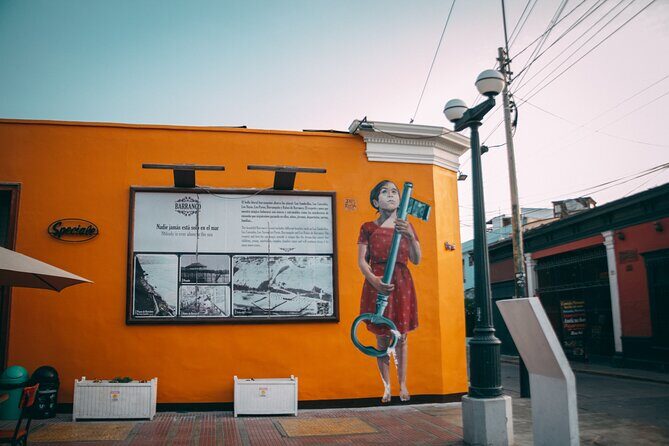
Stop 6 is Bajada de los Baños, known for its street art. This is where Barranco’s creativity shows up in a way you can feel with your eyes. The itinerary highlights that urban art—especially graffiti in traditional streets—is adding color and attracting more admirers over time.
This stop works best if you enjoy noticing small details. Look at how murals relate to the street layout, how the walls turn into conversation pieces, and how different artworks can sit next to older building textures. With a guide, you can also get help interpreting what you’re seeing without turning it into homework.
Time is about 30 minutes. That’s enough to walk a section, take photos, and get a few standout shots without turning it into an all-day art project. Admission is listed as free here, so your “investment” is your time and your attention.
Possible consideration: street art areas can be crowded depending on the day. If you want clean photos with fewer people in the frame, ask your guide when the best moments are for walking through.
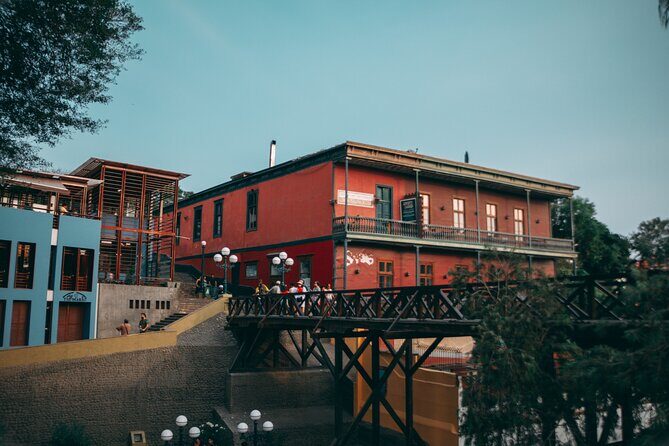
Puente de los Suspiros (1876): A Romantic Bridge With a Local Tradition
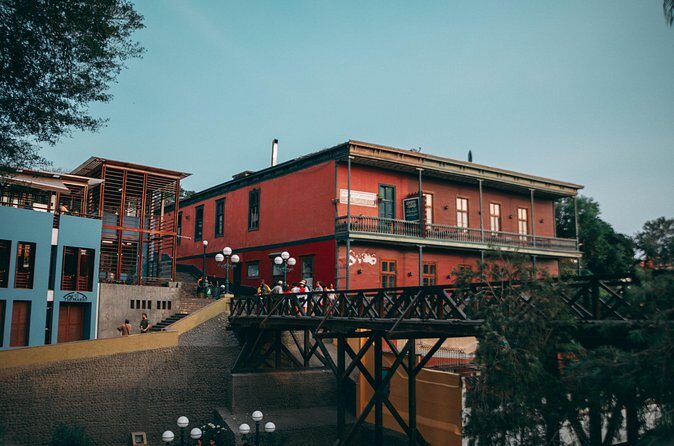
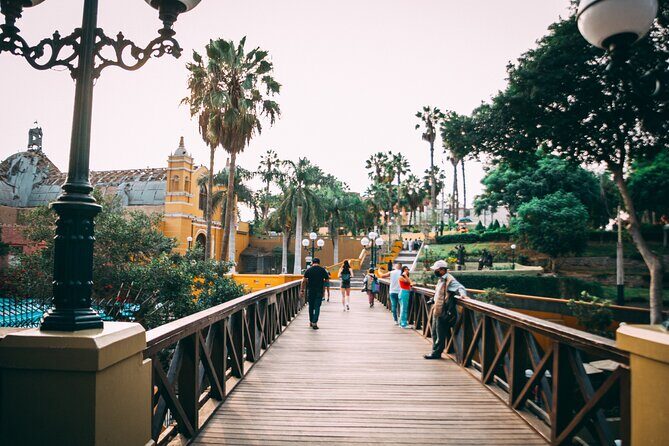
Stop 7 is Puente de los Suspiros, the Bridge of Sighs, built in 1876. The itinerary also notes a tradition: if it’s your first time visiting, you can make a wish before crossing.
That’s the type of local detail that’s fun because it gives you a reason to slow down. It’s not just a bridge. It’s a small ritual embedded in a sightseeing stop, and it’s one of the easiest places in Barranco to remember later.
Expect a short, satisfying stop: a walk-by, photos, and a moment where you’re not just passing through. Since admission is listed as free, you’re paying for your guide and timing, not a ticket.
Practical tip: if you care about photos, arrive with a plan. Decide if you want a wider bridge view or close-up angles of railings and water direction. Once people begin moving, it’s harder to reset your framing.
The Final Pacific Ocean Viewpoint: Ravine Walk and Small Houses
Stop 8 is the final send-off: a viewpoint to appreciate the Pacific Ocean. The itinerary describes walking through a natural ravine used by bathers, plus seeing small houses built over the years that add personality to the area.
This is a good way to end the tour because it changes the theme one more time. Earlier stops focus on parks, landmarks, and neighborhood culture. Here, you’re looking at the ocean’s scale, plus the human layer of how people live near it.
Why a guided route matters at the end: you get a safer, clearer sense of where to stand and how to approach the viewpoint walk without guessing. Also, the guide can help you understand what you’re seeing as more than scenery.
Time is about 30 minutes, so you’ll want to use that window for both still photos and short video clips that show the coastline context. If weather is good, this is likely to be one of the day’s most memorable frames.
One consideration: because it’s an outdoor ravine walk near the water, conditions matter. The experience notes that it requires good weather, so plan around daylight and avoid expecting it to run the same way if conditions are rough.
Price and Value: Is $90 Per Person Worth It?
At $90 per person for about 4 hours, this tour isn’t trying to be the cheapest option. But when you break down what’s included, the value story gets clearer.
Included in the price:
- Private transportation
- An official tourism guide
- Entrance fees for the places on the itinerary (noted as free for the stops)
So you’re mostly paying for:
1) A guide’s time (and the ability to make stops efficient)
2) Transport so you’re not spending your sightseeing time navigating transfers
3) Entry handling so you’re not scrambling around ticket logic
When you combine that with the route design—eight major stops, each around 30 minutes—the pricing can make sense, especially if you’re traveling with family or a friend group that wants an easy structure.
Also, the reviews’ strongest themes align with why you’d pay: people highlight great information and photo opportunities, and they specifically praise the guide’s kind, patient, accommodating style. That kind of guide support matters a lot in Lima because the city is best understood through context, not just through photos.
Not included:
- Feeding (you’ll bring your own snacks or buy locally)
- A pickup fee of $10 each way if you want pickup from a location not in the itinerary’s mentioned area
Who Should Book This Private Miraflores and Barranco Tour
I’d steer you toward this tour if you want:
- A guided highlights route that still feels personal because it’s private
- Coast views and romantic park moments plus street art and neighborhood culture
- A pace that’s structured enough to work in just half a day
It’s also a solid match if you’re the type who likes asking questions and learning why a place looks the way it does. Stops like Faro La Marina and El Parque del Amor are more enjoyable when you know the names and the story behind the design elements.
If you’re visiting Lima for the first time, this route is a strong “core city” sampler. If you already know Miraflores well and want deep Barranco-only exploring for hours, you might prefer a longer neighborhood-focused plan instead of a multi-stop sampler.
Should You Book This Tour?
Yes, if you want a smart, good-looking itinerary that covers Miraflores and Barranco without forcing you to manage logistics. It’s especially worth it if you care about photo angles and you’d like a guide who stays patient while you frame your shots and ask questions.
Skip it or choose something else if you hate fixed schedules, want long stays at one specific spot, or are traveling only for shopping or only for beach time. This tour’s strength is balance: parks, ocean outlooks, history touches, and street art, all wrapped in a private 4-hour format.
FAQ
How long is the Private Tour in Miraflores and Barranco?
It runs about 4 hours (approx.) with around 30 minutes at each of the 8 stops.
Is this a private tour?
Yes. It’s a private tour/activity, and only your group participates.
What is included in the $90 per person price?
The price includes private transportation, an official tourism guide, and entrance fees for the places on the itinerary.
Are entrance tickets covered?
Yes. The itinerary lists admission tickets for the included stops as free, and entrance fees are included in the tour.
Is pickup included?
Pickup isn’t included for locations outside the itinerary’s mentioned area. Pickup is listed as an additional $10 each way if you want it.
Is food included?
No. Feeding is not included.
What should I do if the weather is poor?
The experience requires good weather. If it’s canceled due to poor weather, you’ll be offered a different date or a full refund.
What is the cancellation deadline for a full refund?
You can cancel up to 24 hours in advance for a full refund. If you cancel less than 24 hours before the start time, the amount paid is not refunded.