REVIEW · LIMA
Lima: Tour to Huaca Pucllana and Huaca Mateo Salado
Book on GetYourGuide →Operated by Tangol · Bookable on GetYourGuide
Two Lima huacas, one city afternoon. I love how this tour stitches together Huaca Pucllana in Miraflores and Huaca Mateo Salado in Pueblo Libre, with a guide who explains what you’re seeing and why it mattered. It’s a smart way to understand Lima’s ancient cultures without spending your day hopping between far-off sites.
I also like the scale and detail at Mateo Salado, roughly 1,400 years old, where you connect the ancient Lima/Ychsma story to the wider Inca world through the Qhapaq Ñan link. One possible drawback: food and drinks are not included, so plan ahead if you get hungry during the four-hour circuit.
In This Review
- Key things to notice before you go
- Lima archaeology without leaving the city
- Getting picked up in Barranco, San Isidro, and Miraflores
- Huaca Pucllana in Miraflores: an adobe pyramid you can’t miss
- What Pucllana tells you about the Lima culture (200–700 A.D.)
- Huaca Mateo Salado in Pueblo Libre: 1,400 years and a bigger story
- The Inca reuse angle (Qhapaq Ñan and Pachacamac)
- What you might spot: adobe, reliefs, and painted figures
- How the guided tour makes the sites click
- Timing and pace: a focused 4-hour circuit
- Price and what you actually get for $217
- Practical tips so your afternoon runs smooth
- Who should book this Huaca Pucllana and Mateo Salado tour?
- Should you book?
- FAQ
- How long is the tour?
- What archaeological sites does this tour visit?
- Where are the pickup locations?
- Where are the drop-off locations?
- What is included in the price?
- Are food and drinks included?
- Do I need to bring a passport?
- What should I wear or bring?
- What languages is the guide available in?
- What are the cancellation and refund terms?
- Can I reserve and pay later?
Key things to notice before you go
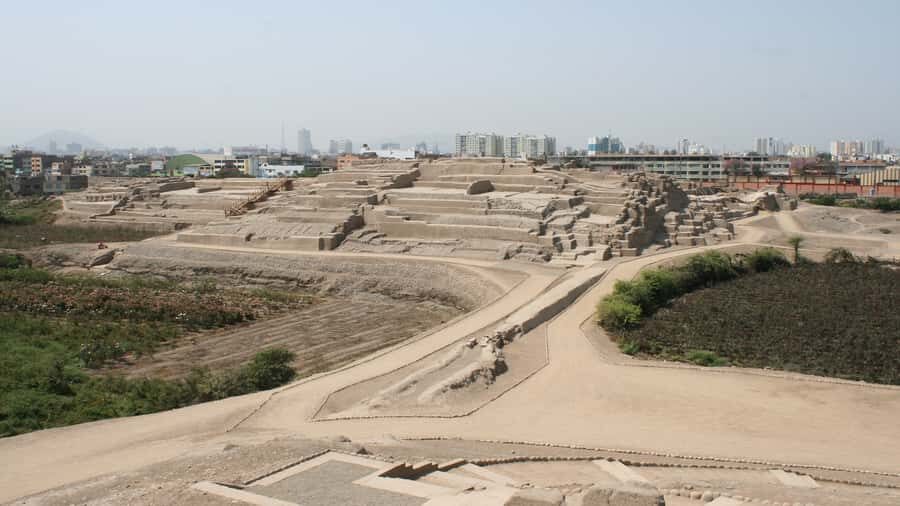
- Huaca Pucllana’s 25-meter truncated adobe pyramid right in Miraflores
- Lima culture roots (200–700 A.D.) at Pucllana and what it tells you about the coast
- Mateo Salado’s ~1,400-year age and its Middle Horizon timeframe (600–900 A.D.)
- A Qhapaq Ñan / Inca Trail connection that helps explain reuse of earlier sites
- Courtyards and squares plus an exhibition hall to give context as you walk
- Pickup from Barranco, San Isidro, and Miraflores for an easy start
Lima archaeology without leaving the city
Lima can feel modern-fast. This tour slows things down. In a few hours, you go from hotel pickup neighborhoods to two archaeological complexes that sit inside the city fabric.
What makes it work is the sequencing. You start with Huaca Pucllana, a site people often recognize visually, then you head to Mateo Salado to see how older cultures and later Inca influence overlap. Even if you only have one afternoon, you’ll leave with a clearer mental map of how Lima’s past connects to today’s districts.
Other Pachacamac and pre-Inca ruins tours in Lima


Getting picked up in Barranco, San Isidro, and Miraflores
You’ll be picked up from hotels in three areas: Barranco, San Isidro, and Miraflores. That’s a practical setup if you’re staying in the standard tourist zones and don’t want to wrestle with transit right before your first huaca.
Once you’re in the van, the drive segments are relatively short. You spend about 15 minutes getting to the first stop, then around 30 minutes to the second, and roughly 25 minutes back to your drop-off areas. Translation: you spend your time where it matters, at the sites, not in traffic.
The tour is listed as a private group. The main takeaway for you is simple: the guide can keep the pace aligned to your group rather than racing everyone through.
Huaca Pucllana in Miraflores: an adobe pyramid you can’t miss
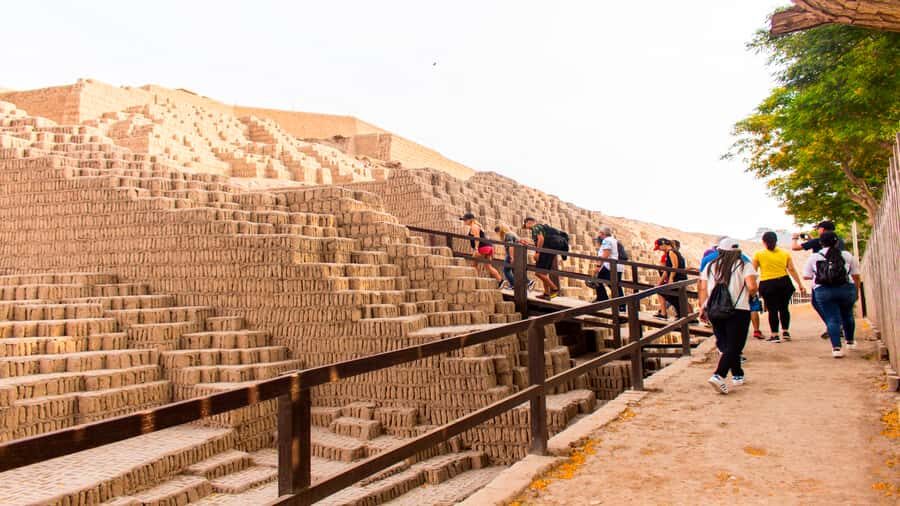
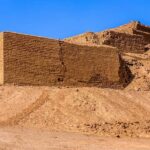
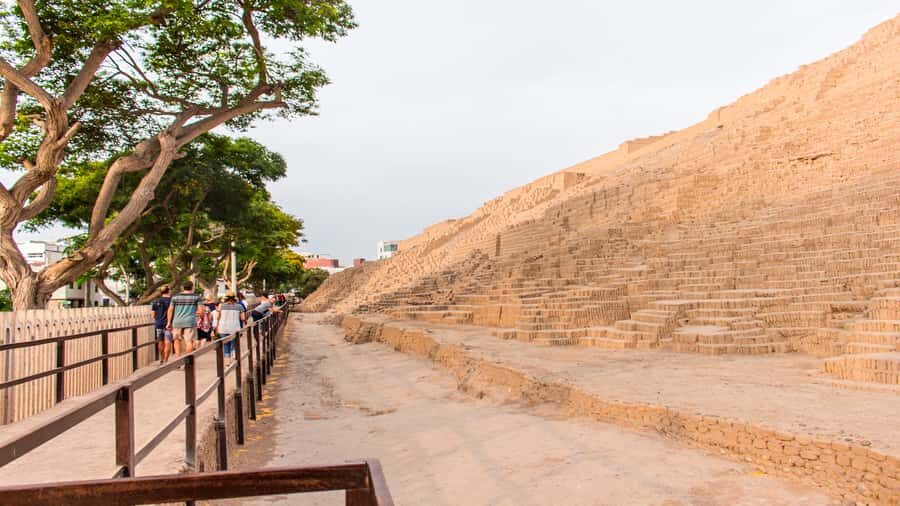
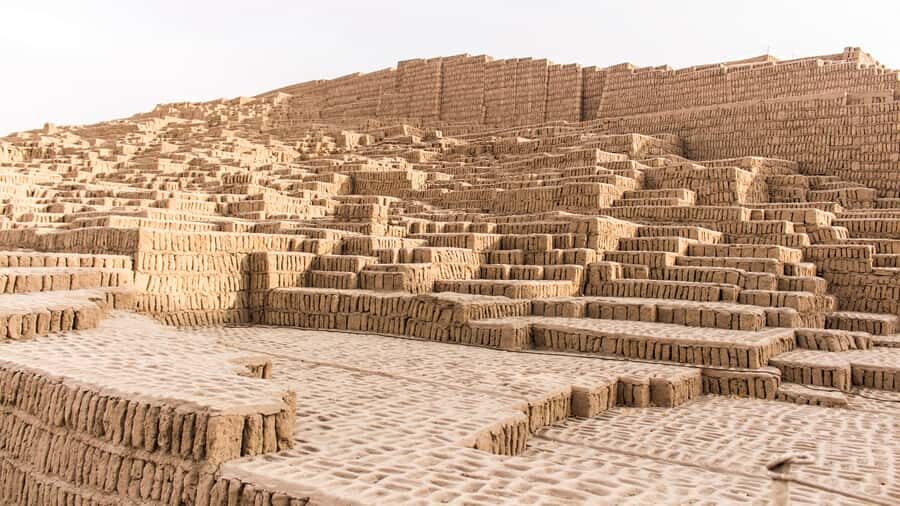
This is the headliner, and it’s in the heart of Miraflores. Huaca Pucllana is a truncated adobe pyramid that rises to about 25 meters. When you’re standing near it, you get why people call it iconic. It feels solid, almost like it shouldn’t be here—until your guide explains the coast-side Lima culture behind it.
Your visit includes a guided tour of about 80 minutes. You’ll explore courtyards and squares within the complex, then you’ll also have time for an exhibition hall where secrets are presented in a more structured way. That matters because adobe pyramids can look mysterious if you only see them from the outside. The guide helps you connect layout to purpose.
What Pucllana tells you about the Lima culture (200–700 A.D.)
This huaca traces back to the Lima culture, which flourished on Peru’s central coast between 200 and 700 A.D. The structure served as a ceremonial and administrative center. In plain terms, it wasn’t just a temple stop. It was also a place tied to how people organized important life-and-community decisions.
Pucllana was discovered in the 1980s during urbanization works in Lima. After that, excavation and restoration began to preserve the site. That backstory gives you a reality check: Lima’s growth didn’t erase the past, but it did force the past to be found, protected, and interpreted—right in the middle of city life.
Huaca Mateo Salado in Pueblo Libre: 1,400 years and a bigger story
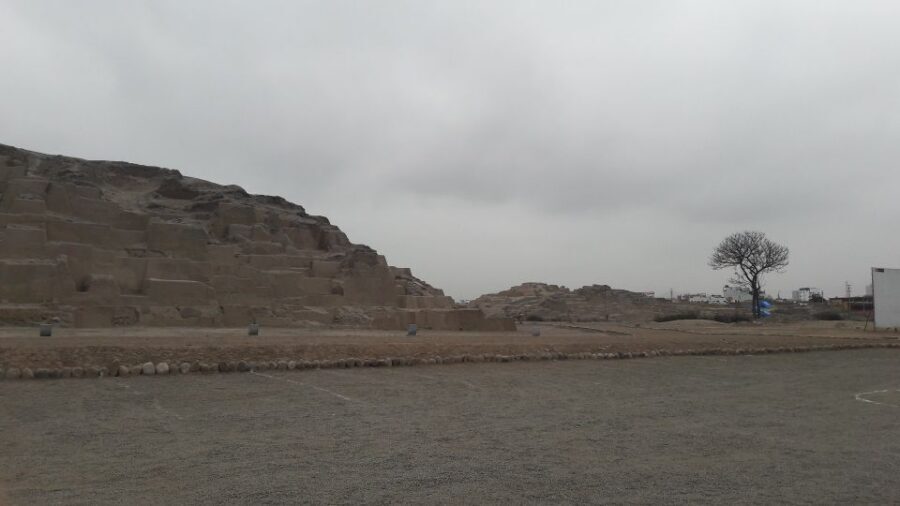
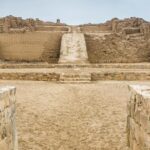
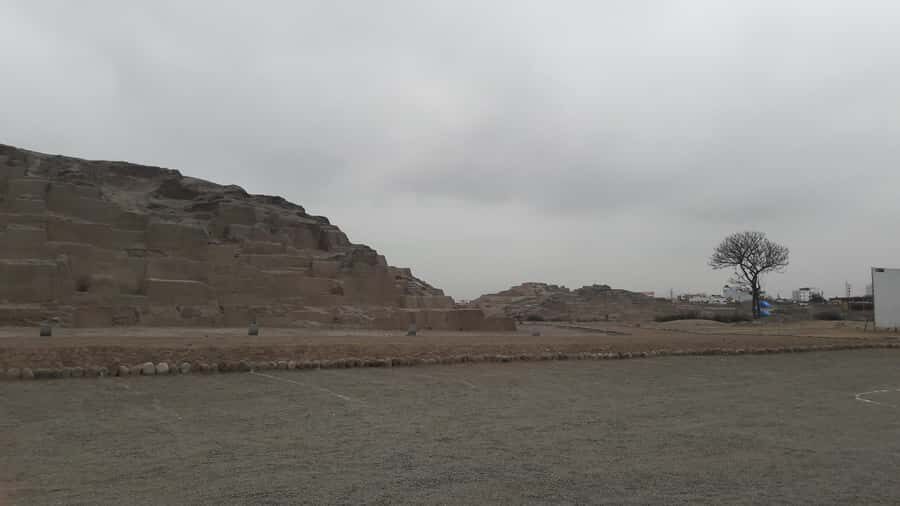
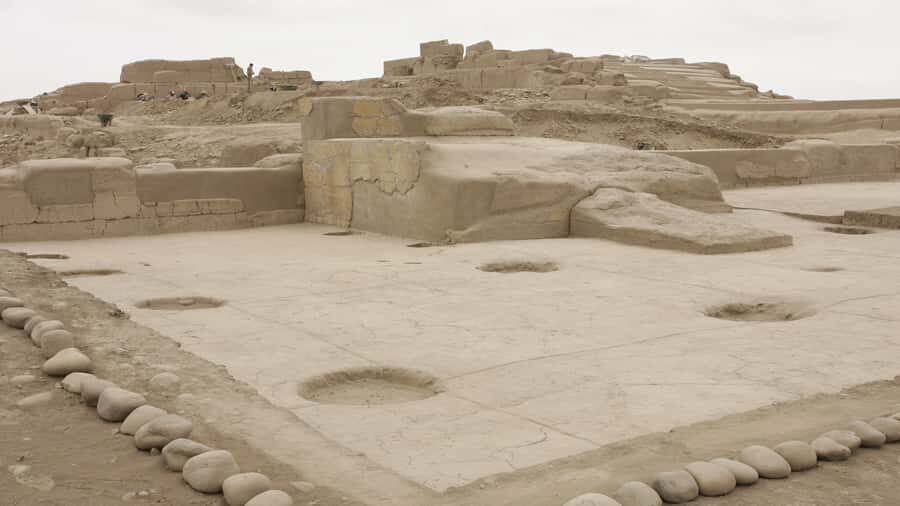
After Pucllana, you head to Pueblo Libre for Huaca Mateo Salado. This one is roughly 1,400 years old and tied to the Middle Horizon period (about 600–900 A.D.). Your guide frames it as an administrative-ceremonial center built by the ancient Lima people, with a strong connection to Ychsma culture.
The complex includes a truncated pyramid and a ceremonial plaza, surrounded by auxiliary structures. The design helps you imagine how these spaces were used. Even if you’re not a specialist, a plaza signals gatherings. A main pyramid signals formality and status in the ceremonial role.






The Inca reuse angle (Qhapaq Ñan and Pachacamac)
Here’s the part I found most useful for understanding the big picture: the Incas reused Mateo Salado. Your guide connects it to the legendary Qhapaq Ñan, also known as the Inca Trail, and explains the idea that this huaca was used to connect toward Pachacamac, south of Lima.
That reuse detail matters because it stops archaeology from feeling like two separate timelines. You start seeing continuity: later empires didn’t just replace earlier sites. They often incorporated, adapted, and re-linked them into a broader political and spiritual network.
What you might spot: adobe, reliefs, and painted figures
The information provided for Mateo Salado says the main pyramid was covered in adobe and adorned with reliefs and mural paintings. Those depictions included human figures, animals, and deities tied to Lima mythology. You won’t necessarily get every painted detail visible on your walk, but knowing what was there changes how you look at the structure.
It’s the difference between seeing a shape and understanding what it once communicated.
How the guided tour makes the sites click
A lot of huacas can feel like outdoor puzzles. This tour helps you solve the puzzle with a professional guide available in English, Spanish, and Portuguese. That language support matters if you’re traveling with friends who don’t share the same comfort level.
I especially like how the guide ties each site to purpose. At Pucllana, it’s ceremonial and administrative functions tied to the Lima culture timeline. At Mateo Salado, it’s admin-ceremonial use, then the Inca reuse and the connection between route networks and religious-political meaning.
If you’re the kind of person who reads a plaque and moves on, you’ll still get value here. The guidance is structured enough to help you understand what to pay attention to—courtyard layouts, the sense of formality in plaza spaces, and why the pyramid shape isn’t accidental.
Timing and pace: a focused 4-hour circuit
The full experience runs about four hours. That’s a sweet spot in Lima. Long enough to visit both major huacas with guided time, not so long that you’re fried from transport and heat.
The schedule is simple:
- You’re picked up from your district.
- You visit Pucllana for about 80 minutes.
- You transfer to Mateo Salado, then tour it for about 1.5 hours.
- You’re dropped back in Barranco, San Isidro, or Miraflores.
The practical point for you: wear comfortable clothes. You’ll be walking and standing enough to feel it. You’ll also want your sunglasses and sunscreen, since this is an outdoor city visit. Bring patience for the fact that archaeological sites take time to interpret, even when the walk itself isn’t long.
Price and what you actually get for $217
The listed price is $217 per person for a four-hour private group experience. On the surface, that may sound steep if you’re comparing it to a basic city bus day. But here’s the value math I’d use.
You’re paying for:
- Hotel pickup and drop-off in three districts
- A professional English/Spanish/Portuguese guide
- Tickets to Huaca Pucllana and Mateo Salado
- Van transport between the two complexes
When entrance fees and guide time are bundled, the cost often becomes easier to justify. Also, both sites are in Lima districts, so you’re not paying the hidden cost of long-distance commuting.
One trade-off: food and drinks are not included. So you either eat before you go or plan a quick stop nearby. If you rely on included meals to manage your budget, this may feel like a small additional expense.
Practical tips so your afternoon runs smooth
Here’s what you’ll want ready, straight from the tour’s essentials list:
- Passport
- Sunglasses
- Sunscreen
- Comfortable clothes
I’d add one simple planning habit: since food and drinks aren’t included, don’t assume you’ll find something quick at the right moment. If you snack easily, consider packing something you can eat during the gap between stops. You’ll feel better, and you’ll enjoy the second site more.
Also, check your camera and phone battery beforehand. These two huacas are close enough to make comparisons easy, which is exactly what you’ll want to do after you learn what each complex was for.
Who should book this Huaca Pucllana and Mateo Salado tour?
This tour fits best if you want:
- Archaeology in the city, not a day trip far outside Lima
- Two complementary sites in one afternoon
- A guide who connects Lima culture timelines to later Inca reuse
It’s also suitable for all ages. If you’re traveling with family, the guided format can help keep interest up without everyone turning into a museum docent on their own.
If you’re short on time and still want a meaningful slice of pre-Columbian Lima, this is a strong choice. You’re not just checking off names; you’re learning why these huacas mattered as ceremonial and administrative spaces.
Should you book?
Yes, if your goal is a high-value archaeology outing that fits into a single afternoon. You’ll get guided visits to Huaca Pucllana and Huaca Mateo Salado, with tickets included and pickup from three popular districts. The strongest reason to book is the way the tour connects separate time periods: Lima culture at Pucllana, then Mateo Salado’s Middle Horizon setting, and finally the Inca-era reuse angle tied to the Qhapaq Ñan and Pachacamac.
Skip it only if you know you need food included to stay comfortable, or if you prefer unguided wandering where you control every pace with no structured explanation.
FAQ
How long is the tour?
The tour duration is 4 hours.
What archaeological sites does this tour visit?
It visits Huaca Pucllana in the Miraflores district and Huaca Mateo Salado in the Pueblo Libre district.
Where are the pickup locations?
Pickup is available from hotels in Miraflores, San Isidro, and Barranco.
Where are the drop-off locations?
Drop-off is available in Barranco, San Isidro, and Miraflores.
What is included in the price?
The tour includes hotel pickup, an official tour guide (English, Spanish, and Portuguese), and tickets to Huaca Pucllana and Huaca Mateo Salado.
Are food and drinks included?
No. Food and drinks are not included.
Do I need to bring a passport?
Yes, the tour’s information says to bring your passport.
What should I wear or bring?
Bring sunglasses, sunscreen, and comfortable clothes. The tour also specifies a passport.
What languages is the guide available in?
The guide is available in English, Spanish, and Portuguese.
What are the cancellation and refund terms?
Free cancellation is available up to 24 hours in advance for a full refund.
Can I reserve and pay later?
Yes, the tour offers a reserve now & pay later option.