REVIEW · LIMA
Pre Inca Temple of Pachacamac Half-Day Tour from Lima
Book on Viator →Operated by VIPAC Travel · Bookable on Viator
Pachacamac feels like stepping sideways in time. This half-day tour heads about 30 km south of Lima to the adobe-and-clay religious complex where Incas adapted earlier cultures, and where Temple of the Sun and Temple of the Moon do the talking. I like the small group format here because it keeps the pace human, and your guide can actually answer your questions instead of racing the clock.
My second big like is the pricing clarity. The tour includes admission tickets for the archaeological sanctuary and the Site Museum, so you’re not doing surprise math at the door. Add in hotel pick-up and drop-off plus an air-conditioned minivan, and the logistics stay calm.
One possible drawback: at roughly 3 hours 30 minutes, you’ll see the highlights rather than every corner of this massive site. If you’re the type who loves slow wandering with long photo pauses, you may feel slightly rushed near the top areas.
In This Review
- Key points to know before you go
- A half-day away from Lima: what the drive sets up
- Hotel pick-up, small-group pacing, and the real value of included tickets
- Entering the Pachacamac sanctuary: adobe, sea views, and a pilgrimage hub
- Temple of the Sun and the Temple of the Moon: clay bricks and design you can read
- The rest of the complex: Incas, admin spaces, and the building blocks of belief
- Museum time at Pachacamac: what excavations are telling us
- Walking pace and practical realities: how to avoid the common annoyances
- Guides and drivers: what makes the experience feel personal
- Who should book this Pachacamac half-day tour
- Should you book this tour?
- FAQ
- How long is the Pre Inca Temple of Pachacamac half-day tour?
- What is the price per person?
- What time does the tour start?
- How far is Pachacamac from Lima?
- How many people are in the group?
- What is included in the tour price?
- Does the tour include the Site Museum?
- Is the tour suitable for most travelers?
- What is the cancellation policy?
Key points to know before you go
- Small group (up to 12) keeps the walking and explanations manageable.
- Admission is included, including the Site Museum, so your budget is simpler.
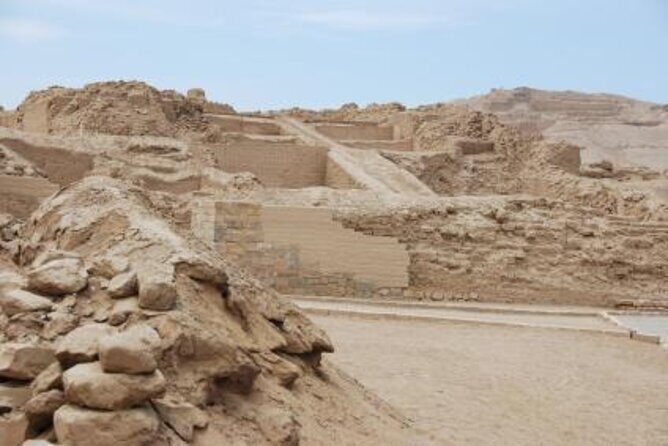
- Temple of the Sun’s construction details are a real wow moment, including millions of sun-dried bricks.
- Pre-Inca through Inca layers show up in the same complex, not in separate days.
- Guides with strong English skills (people often cite names like Mario, Nataly, Eduardo, Mila Campos, and Olinda) make the ruins easier to understand.
- Plan for wind and limited toilets on-site; the bathroom situation is a common snag.
A half-day away from Lima: what the drive sets up
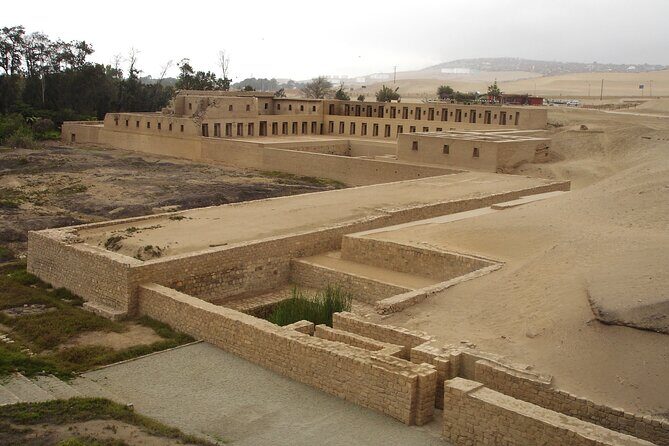
This tour starts at 9:00 am with pick-up from your hotel or lodging in central Lima, then you head south along the coast toward the Archeological Sanctuary of Pachacamac. The setting matters: the sanctuary sits in an area built of adobe with views toward the sea and the Lurin river valley, so you get a sense right away that this place wasn’t tucked away in the middle of nowhere.
The ride is in an air-conditioned minivan, which is a plus in Peru’s coastal weather swings. A couple of guide-driver combos are often praised for punctuality and safety, so the day starts steady instead of chaotic.
If you have only one morning or one short afternoon in Lima, this is a smart use of time. You get out of the city, see a major ancient site, and still come back to Lima without eating up your whole day.
Other Pachacamac and pre-Inca ruins tours in Lima

Hotel pick-up, small-group pacing, and the real value of included tickets
At $79 per person, the headline is price—but the better question is value. Here, admission tickets are included, including the Temple of Pachacamac area and the Site Museum, so you’re paying for a guided visit rather than piecemealing costs.
That also helps the flow. Instead of losing time and energy to ticket lines and guesswork, your guide can steer the tour from stop to stop. And with a max group size of 12, the tour doesn’t feel like a conveyor belt. You’re more likely to get explanations that match your interests, whether you’re into architecture, mythology, or just how these societies built and governed.
Bilingual English-Spanish guides are part of the package, and multiple guide names come up in feedback as particularly strong at clear explanations and answering questions patiently (people mention guides such as Mario, Nataly, Eduardo, Edwin, Willian, Mila Campos, Marco Polo, Victor, Ursula, Daniel, and Mayron). On a site like Pachacamac, that matters as much as the stones.
Entering the Pachacamac sanctuary: adobe, sea views, and a pilgrimage hub
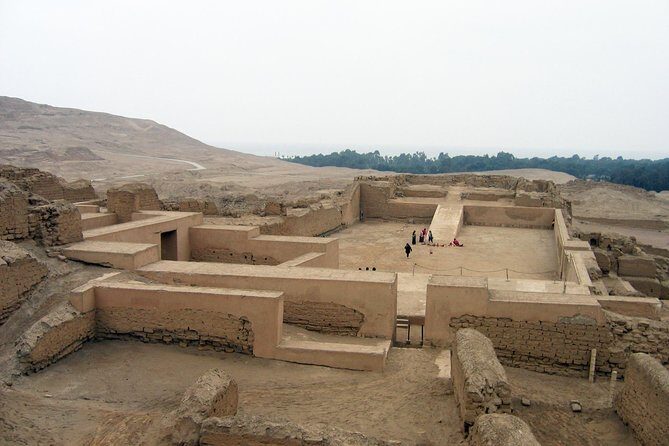
Your first big stop is the Archeological Sanctuary of Pachacamac, about 30 km south of Lima. Even before you get into the densest temple zones, you’re looking at the kinds of building materials and positioning that made the site important. Adobe construction with sea and valley views tells you this was tied to place and movement—people were drawn here, not just passing by.
What makes the sanctuary compelling is that it wasn’t only one culture and one timeline. It became a pilgrimage site for many groups over time. When the Incas arrived, they adapted the existing complex and respected local construction patterns while turning the site into an administrative center.
That layering is what you’ll feel during the walk. Instead of seeing one “theme,” you see a long history of additions and reinterpretations, which makes the ruins more than a collection of shapes.
Temple of the Sun and the Temple of the Moon: clay bricks and design you can read
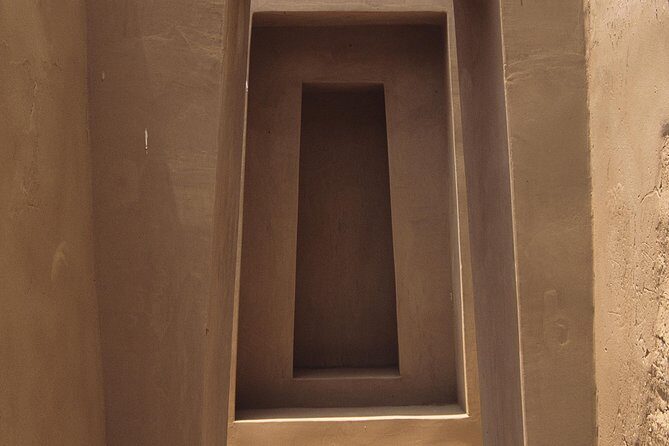
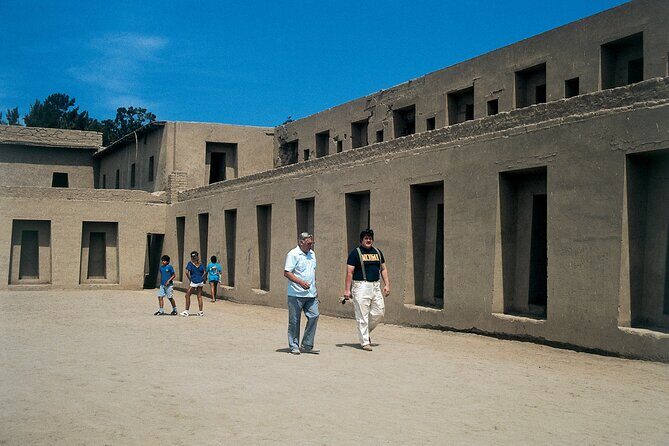
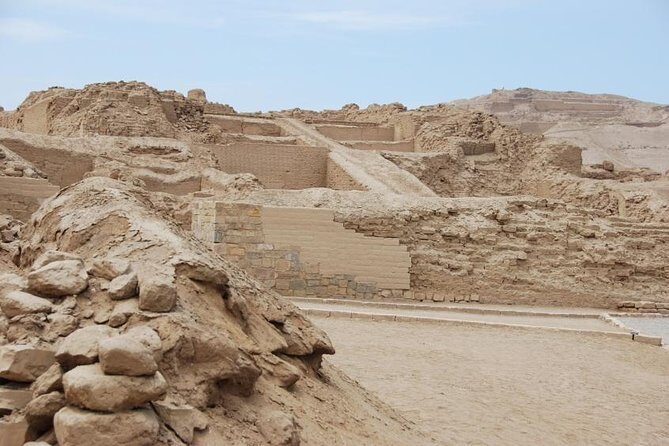
The temples are the centerpiece, and for good reason. The Temple of the Sun and the Temple of the Moon are built with clay and adobe techniques, and you’ll hear how the Temple of the Sun alone used an estimated 50 million sun-dried bricks. That scale isn’t trivia. It’s a window into organization—labor, planning, and the value placed on building something that could last.
Your guide should help you “read” what you’re seeing. It’s not just that the temples are big; it’s how they fit into the overall complex. You’ll also learn about colorful murals and the architectural prowess that made these areas central to worship.
One more thing you’ll appreciate: the tour connects the dots between eras. Excavations continue to reveal information about cultures spanning roughly 200 to 800 AD, including Moche and Huari influences. Even if you don’t remember every name, you’ll come away with a clearer sense that Pachacamac was a crossroads, not a sealed-off world.
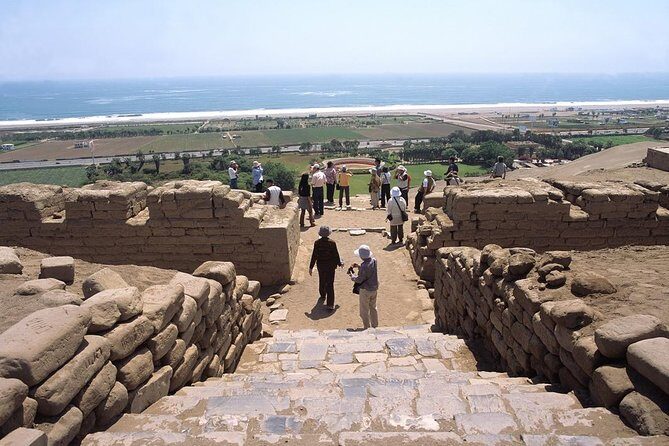
If you walk toward higher areas, you may climb a lot of steps to reach viewpoints. One common highlight is reaching a top area where the ocean comes into view, so the hike has a payoff.
The rest of the complex: Incas, admin spaces, and the building blocks of belief
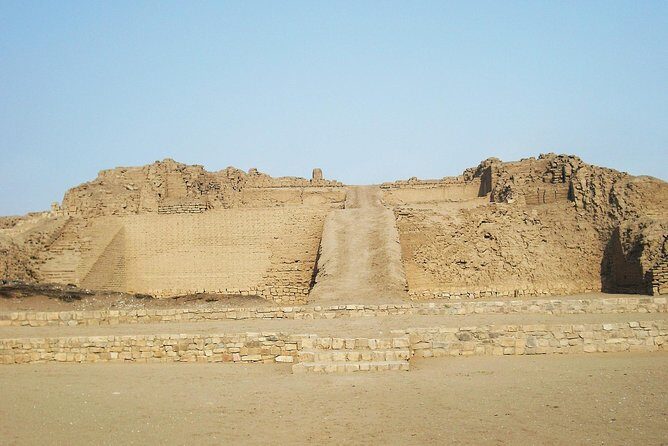
While the temples grab your attention, the rest of the site helps you understand how Pachacamac worked day to day. The Inca adaptation turned parts of the complex into administrative functions while still using and reshaping earlier structures.
As you move around, you can expect to see major named zones such as:
- the Acllahuasi
- the Palace of Taurichumbi
- the Pilgrimage Plaza
You may also notice how different sections reflect different periods. One guide-led walk described ramp-related step-pyramid features, plus areas discussed as Inca-related organization. Another route description included specific site elements like areas with a stadium-like bullring and open fields nearby, as well as a sense of directional routes through the complex.
Even if your exact path differs slightly with the group’s pace, the point stays the same: Pachacamac isn’t only about one monument. It’s a whole operating system for religion, administration, and movement.
A few more Lima tours and experiences worth a look



Museum time at Pachacamac: what excavations are telling us
Between temple zones, you’ll stop at the Site Museum. This is a smart part of the half-day, because it helps you make sense of what the ruins can’t fully show on their own.
The museum is where you’ll typically get the “why” behind the walls: salvaged remnants from the area, plus context that makes the on-site architecture feel intentional instead of random. In particular, it’s where you see artifacts like textiles or other finds that help explain how people lived, worshiped, and recorded meaning through their craft.
Museum time is also one of the best ways to deal with weather and wind. If the coastal wind picks up—as it can—this indoor break makes the entire experience feel more balanced.
Walking pace and practical realities: how to avoid the common annoyances
This is described as a half-day tour with participation for most travelers. Movement is moderate, but it still includes walking and steps, especially if you want to reach higher temple areas for the best views.
A useful practical tip: the site’s bathroom situation is limited. One piece of advice I really trust from past experiences is to ask your guide to use the restroom at the entrance area near the ticket office, because there may be no toilets along the walking route. It’s the kind of small detail that can save your day.
Wind is another reality. One traveler noted a very enjoyable trip despite windy conditions, and that matches what the site’s coastal setting suggests. If you run cold easily, it’s smart to plan for a breezy top.
Finally, remember the time limit. At about 3 hours 30 minutes, your guide will focus on the essentials. That’s good for most people. If you’re the type who wants to study one temple detail for an hour, you may want to book extra time on your own after the tour.
Guides and drivers: what makes the experience feel personal
Pachacamac is easy to enjoy visually, but harder to understand without a guide who can connect the dots. This tour leans hard into that part: a professional bilingual English-Spanish speaking guide, plus an experienced driver.
Names that come up for strong guiding style include Mario, Nataly, Eduardo, Edwin, Willian, Mila Campos, Marco Polo, Victor, Olinda, Ursula, Daniel, Mayron, and Sonia. Common threads in what people like are clear English, patience with questions, and the ability to add context without turning the day into a lecture.
A few drivers are also praised by name, including Luis, Angel, and Carlos, with comments about feeling safe and comfortable in the van. That matters when you’re bouncing between city pickup and a long walk in an archaeological sanctuary.
Who should book this Pachacamac half-day tour
You’ll probably love this tour if:
- You’re in Lima for a short time and want a major ancient site without full-day travel.
- You like history that has layers: pre-Inca cultures such as Moche and Huari plus later Inca adaptation.
- You want architecture explained in plain language, not just “look at the ruins” sightseeing.
- You prefer small-group pacing and included tickets so you don’t spend your morning figuring out logistics.
You might skip it or add extra independent time if:
- You hate walking steps and want a mostly flat route.
- You need lots of free time to wander without a schedule.
- You’re looking for a deep, museum-heavy day only. This is focused, not a long study session.
Should you book this tour?
If you want one solid ancient-site day out of Lima, I’d book it. The included admission, the museum stop, and the focused temple highlights make it a good use of a half-day. And the combination of a bilingual guide plus a capped group size keeps it from feeling rushed in the way larger tours often do.
My only caution is timing expectations. With about 3.5 hours, you’re there for key monuments and major zones—so come with curiosity, not the plan to photograph every brick.
If Pachacamac is on your Lima list, this tour is an efficient, well-run way to understand what you’re seeing while still having a chance to enjoy the views and the atmosphere.
FAQ
How long is the Pre Inca Temple of Pachacamac half-day tour?
The tour runs about 3 hours 30 minutes.
What is the price per person?
The price is $79.00 per person.
What time does the tour start?
The start time is 9:00 am.
How far is Pachacamac from Lima?
The site is described as about 30 km south of Lima.
How many people are in the group?
The group maximum is 12 travelers.
What is included in the tour price?
It includes a professional bilingual English-Spanish guide, hotel pick-up and drop-off, an air-conditioned vehicle, and admission tickets to the Temple of Pachacamac and the Site Museum.
Does the tour include the Site Museum?
Yes, admission to the Site Museum is included, and the museum is part of the visit.
Is the tour suitable for most travelers?
The information provided says most travelers can participate.
What is the cancellation policy?
You can cancel for a full refund up to 24 hours before the experience’s start time. Free cancellation is offered, with local time cut-offs.