REVIEW · LIMA
Private Local Artisans and Pachacamac Tour
Book on Viator →Operated by Alternative Peru · Bookable on Viator
Pachacamac and crafts in one day is a smart combo. I love the Pachacamac museum-and-temple route, plus the chance to eat lunch with an artisan family and visit workshops in Ichimay Wari. One thing to consider: it’s a full 7-hour outing with some walking at the archaeological site, so bring comfortable closed shoes.
The pace is designed for learning without feeling rushed. You get both the big picture (Inca and pre-Inca layers at Pachacamac) and the hands-on side (textiles, ceramics, and other crafts made by people who rebuilt their lives through community). If you’re sensitive to cooler weather or light drizzle, pack accordingly—especially from June to October.
This is also a tour with real local impact. Your entrance fees are handled, and the tour includes a contribution to an artisan cooperative, so you’re not just collecting photos—you’re supporting the people keeping traditions alive.
In This Review
- Key highlights at a glance
- Pachacamac Temples, Museum First: Getting Your Bearings Fast
- What Pachacamac looks like in practice
- A drawback to plan for
- The Ocean Surprise: Why Pachacamac Feels Bigger Than It Sounds
- Ichimay Wari and Ayacucho Craft: Art Made by People Who Rebuilt
- Lunch with an artisan family (the heart of the day)
- Workshops: textiles, ceramics, and the process behind the product
- A realistic note on quality comparisons
- Value and Timing: Is $202 for 7 Hours Worth It?
- Guides in Action: What Makes the Day Feel Meaningful
- What to Bring (And What to Skip)
- Souvenirs, Fair Value, and How Not to Get Overwhelmed
- Who This Tour Suits Best
- Should You Book This Pachacamac and Artisans Tour?
- FAQ
- How long is the Private Local Artisans and Pachacamac Tour?
- Does this tour include museum and entrance fees?
- Is lunch included?
- Where does pickup and drop-off happen?
- What will I do at Pachacamac?
- What’s included besides meals and transport?
- What should I bring for comfort?
- Can I bring dietary needs or service animals?
- Is there free cancellation?
Key highlights at a glance
- Pachacamac, layered by cultures: A site with temples connected to traditions stretching back to around 200 AD.
- Museum-first orientation: The trip starts in the museum so you understand what you’re seeing out in the complex.
- Ichimay Wari artisan neighborhood: A community of Ayacucho artisans formed after displacement in the 1980s and 1990s.
- Home lunch with an artisan family: Eat where the craft life happens, not in a generic restaurant.
- Workshop visits you can actually compare: You’ll see how pieces are made, not just the finished goods.
- All entrance fees included: Less hassle, more time on the ground.
Pachacamac Temples, Museum First: Getting Your Bearings Fast
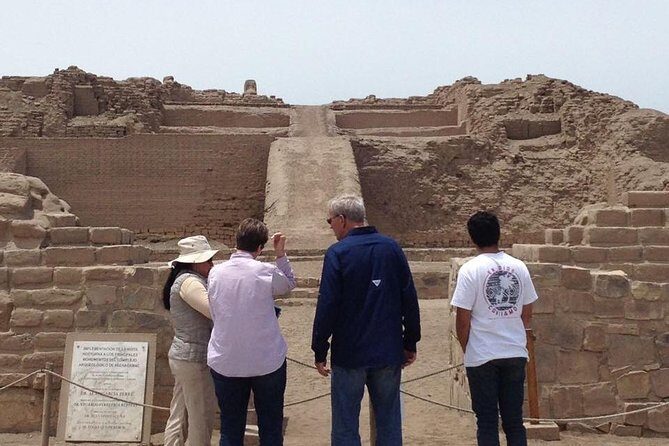
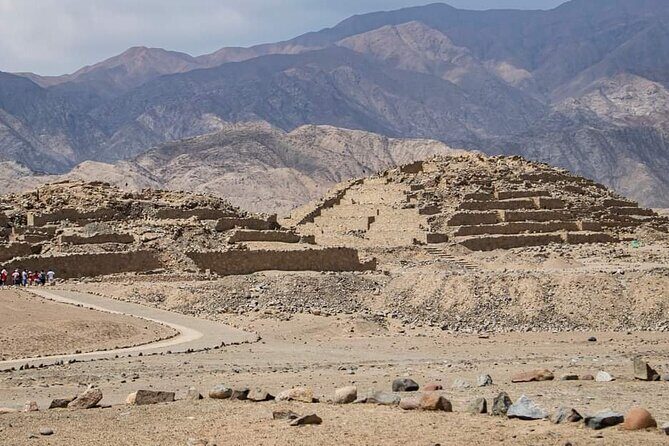
If you only know Pachacamac from a quick stop, you’ll miss the point. The tour starts at the Museo de Sitio y Santuario Arqueologico de Pachacamac, which is where the site makes sense.
You begin with a guided look at the museum’s artifacts pulled from excavations. That matters because Pachacamac isn’t one clean “Inca” stop—it’s a long story with multiple cultural layers. As one guide emphasized during a recent tour day, Pachacamac was a major focus for early Peruvians, and the way later groups added their own temples helps explain why the complex feels like a patchwork of eras.
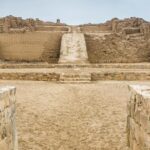
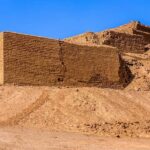
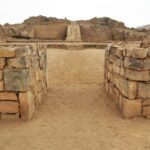
After the museum orientation, you switch from “learning” to “seeing.” The driver takes you around the archaeological complex, and your guide stops at key spots. Some of these are viewpoints where you get the surprise moment: the ocean isn’t far, and the dramatic setting makes the city of Lima feel distant.
Other Pachacamac and pre-Inca ruins tours in Lima



What Pachacamac looks like in practice
Expect a mix of:
- Museum exhibits to frame the site’s timeline
- Temple remains from different eras
- Short walks at selected stops so you can look closely
The tour’s total time at Pachacamac is about 2 hours, including the museum portion. That’s enough time to get context, but not so long that you feel stuck in one place.
A drawback to plan for
Pachacamac includes some walking over uneven ground and around ruins. This is totally manageable for most people (the tour notes that most travelers can participate), but you’ll enjoy it more with closed walking shoes rather than sandals or flexible sneakers that offer little grip.
The Ocean Surprise: Why Pachacamac Feels Bigger Than It Sounds
One of the most useful things you’ll take away from this stop is perspective. Pachacamac sits close enough to Lima that it’s easy to treat as a day-trip “box check.” But the views change that mindset.
As you move through the complex, you can catch wide views over the surrounding area, and on clear days you’ll notice how the Pacific Ocean fits into the story. The architecture and the terrain feel connected to a coastal world, not just an inland monument.
That’s the kind of detail that’s hard to get from photos or from a single stop at a viewpoint. The combination—museum orientation, then multiple ruins stops—helps you understand why the site mattered.
Ichimay Wari and Ayacucho Craft: Art Made by People Who Rebuilt
After Pachacamac, the day shifts from ancient ruins to present-day craft. You head to Ichimay Wari, an artisan neighborhood where many makers trace their roots to Ayacucho.
Here’s the context that makes this stop matter beyond shopping: the community formed as artisans fled the violence of the guerrilla war of the 1980s and 1990s, relocating to the outskirts of Lima. The tour also notes that government support has been limited in many of these areas, so people built their own local economy through traditions and craftsmanship.
You’ll hear that story from your guide, then you’ll see it in action.
Other private tours in Lima





Lunch with an artisan family (the heart of the day)
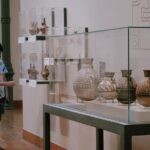
One of the most praised parts of this tour is lunch with a local family. You don’t just eat and move on. You share time in a home where craft is part of daily life.
In a recent experience day, the lunch setting included an artisan who makes pottery—sold worldwide—and even teaches. That gives you a sense of how far these skills can travel, and how much effort goes into the craft even after families relocated.
If you have diet needs, the tour requests you advise them when booking. It’s smart to do that early.
Workshops: textiles, ceramics, and the process behind the product
After lunch, you visit workshops where artisans make:
- Textiles
- Ceramics
- And other traditional handicrafts
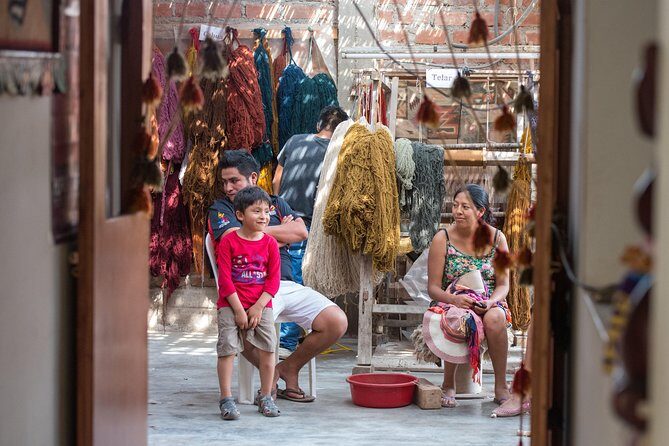
These visits are more than a showroom walkthrough. You’ll watch work happen and learn how pieces are produced.
In one tour day, you could see the full flow in a weaving workshop: wool collected, spun into workable material, formed into balls, and then dyed. You also learned that looms can come in different sizes for different family members, since many family workshops involve everyone in the production chain.
That level of process detail is a big reason this day hits hard. You end up with a stronger sense of value—and you’ll know what questions to ask if you do decide to buy something.
A realistic note on quality comparisons
You might also have the chance to compare work from different makers. One recent tour day included two ceramics artists, with a clear contrast in quality between the first and the second. That’s actually useful, because it helps you see what sets higher-quality work apart.
Value and Timing: Is $202 for 7 Hours Worth It?
At $202 per person for roughly 7 hours, this is not a “cheap bus tour.” But it also isn’t just transportation plus a couple of stops.
Here’s what you’re paying for, in practical terms:
- All entrance fees for Pachacamac are included
- Lunch is included
- You get private transportation and hotel pickup/drop-off
- There’s a contribution to the artisan cooperative
- It’s a private tour, so your group is the only group on the itinerary
For me, the value comes from the mix. Archaeology tours are often one thing only. Craft tours often feel like shopping traps. This one tries to connect both sides with context: you understand the ancient site, then you understand the modern community behind the art.
The private format matters too. When your guide has time to explain, you don’t have to compete with a crowd. You can ask follow-ups, and you get more of that human, conversation-driven feel—especially during the home lunch and workshop visits.
A small scheduling tip: the experience is often booked about 165 days in advance on average. If you’re traveling at a popular time, booking earlier can reduce stress.
Guides in Action: What Makes the Day Feel Meaningful
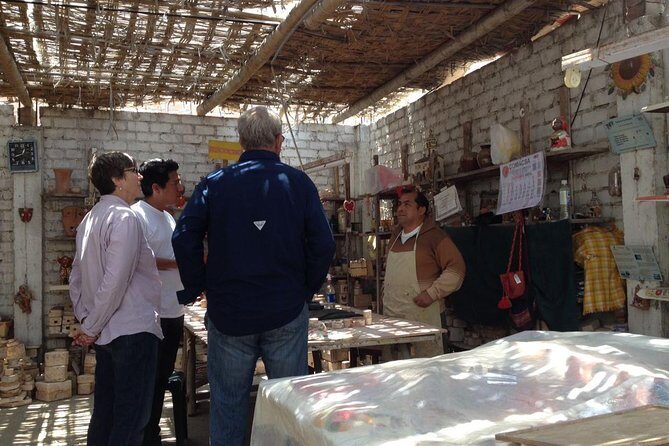
Even with a good itinerary, the guide quality can make or break the day. This tour has strong praise for guides who communicate clearly about the site and the people.
On a recent day, a guide named Daniel made the Pachacamac visit both informative and meaningful, and the museum stops helped the whole story click. Another guide, Eline (spelled that way in one account), was praised for picking people up on time and bringing real passion to the site—complete with a lot of context that makes ruins more than shapes in the sun.
One practical consideration: at Pachacamac, a guide noted there can be moments where understanding a local guide may take extra effort. If you’re picky about audio clarity, plan to take your time, ask for repeats if needed, and remember that guides are often switching between themes quickly.
What to Bring (And What to Skip)
This tour is outdoors for parts of the day, with walking at ruins and workshop areas.
Bring:
- Comfortable closed walking shoes
- Sunscreen and a hat (suggested from October to May)
- A water bottle
Also pack a layer. The tour notes that in June to October, you may have cooler weather and slight drizzle. If you’re using a water-resistant jacket or umbrella, you’ll feel more comfortable during any light rain.
For clothing, plan for an appropriate day out in town and at the ruins. The tour advises dressing for cooler weather and drizzle season.
Souvenirs, Fair Value, and How Not to Get Overwhelmed
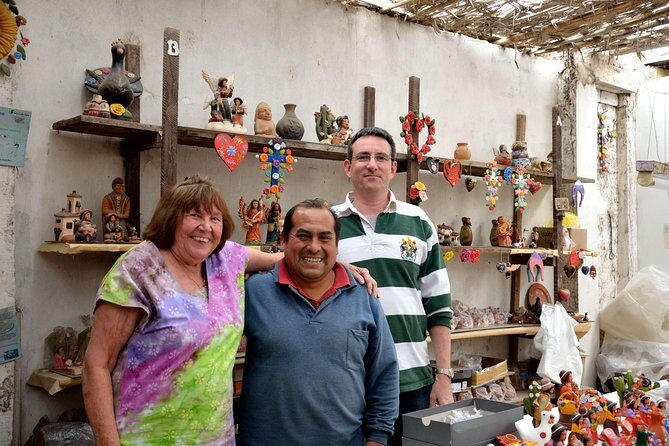
This is the part where it’s easy to turn a great day into a stressful shopping mission. The good news: souvenirs are completely optional.
You’ll have time at artisan workshops, and the tour includes a contribution to the artisan cooperative, which is separate from any purchases. That means you’re supporting the community even if you decide to skip buying.
If you do shop, use the process you’ve learned. Ask:
- What’s made by hand here?
- How long does something like this take?
- What’s the difference between similar-looking pieces?
Because you’ll have seen how crafts are made (not just displayed), you’ll be in a better position to choose thoughtfully.
Who This Tour Suits Best
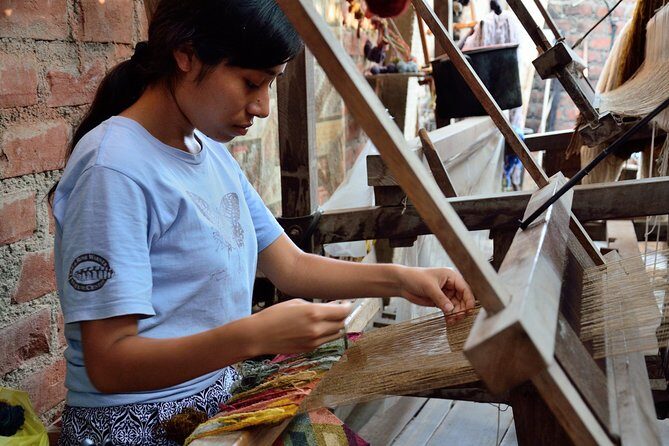
This tour is a good fit if you:
- Want a real connection between history and modern culture
- Like guided explanations more than self-guided wandering
- Enjoy artisan workshops and want to learn the process
- Prefer a private day rather than a crowded group schedule
It’s also a strong choice if you’re tired of generic shore excursions and want a day that feels like it belongs to Lima.
You might want to consider another option if you:
- Want a very low-walking day (there is walking, especially at archaeological stops)
- Dislike outdoor weather changes and don’t plan for light drizzle season
Should You Book This Pachacamac and Artisans Tour?
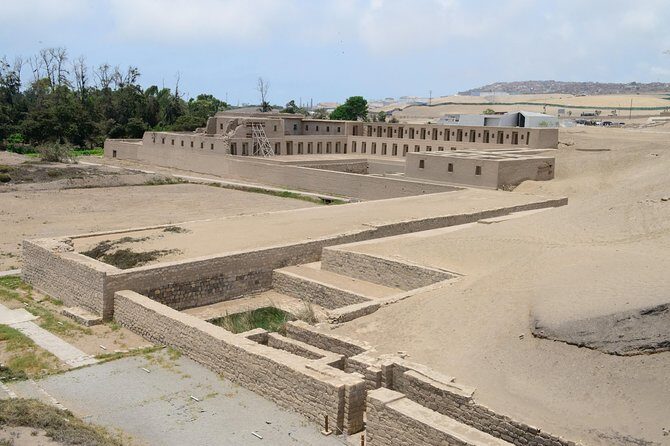
For me, this is an easy yes if you care about meaning over monuments-only. The day connects Pachacamac’s layered past with Ayacucho craft traditions carried forward by a displaced community, and it does it in a way that includes real time for lunch and workshops—not just photo stops.
Book it if you:
- Want all entrance fees handled and a smooth hotel pickup day
- Like small, human moments (home lunch, workshop demonstrations)
- Appreciate learning how things are made, not just what they cost
Skip it only if your priority is a purely archaeological deep-dive or a purely relaxing city day. This one lands in the middle on purpose: it’s history plus hands-on craft, and it’s built for understanding.
FAQ
How long is the Private Local Artisans and Pachacamac Tour?
It runs about 7 hours (approx.), including visits to the Pachacamac museum and archaeological complex, plus time in the artisan neighborhood.
Does this tour include museum and entrance fees?
Yes. All entrance fees are included.
Is lunch included?
Yes. Lunch is included, and it’s served during the artisan-family portion of the day.
Where does pickup and drop-off happen?
The tour includes Lima hotel pickup and drop-off. You’ll confirm the pickup location at booking.
What will I do at Pachacamac?
You’ll start at the Museo de Sitio y Santuario Arqueologico de Pachacamac, then visit different areas of the archaeological complex with stops and some walking for viewing ruins.
What’s included besides meals and transport?
In addition to private transport, activities, and hotel pickup/drop-off, the tour includes a contribution to the artisan cooperative.
What should I bring for comfort?
The tour recommends comfortable closed walking shoes or sneakers, plus sunscreen, a hat, and water from October to May. From June to October, it notes cooler weather and possible slight drizzle—dress and pack for that.
Can I bring dietary needs or service animals?
You should advise any dietary requirements at booking. Service animals are allowed.
Is there free cancellation?
Yes. Free cancellation is available if you cancel up to 24 hours in advance for a full refund.