REVIEW · LIMA
12-Day The Best of Peru
Book on Viator →Operated by VIPAC Travel · Bookable on Viator
Peru hits different when you do it by regions, not day trips. This 12-day route strings together the Pacific coast, the Andes, and the highland lakes with solid logistics and lots of included sights. I love how you get a mix of big-ticket icons and smaller cultural stops, from Lima’s historic center to the condors at Colca.
I also like that the pacing usually gives you an “on and off” rhythm: you get guided time when it matters, then you get some breathing room (like the free afternoon in Paracas). One thing to watch is that this trip climbs fast, and altitude can hit even fit people—so plan for slow starts and consider speaking with a doctor before you go.
In This Review
- Key highlights I’d plan around
- A tour that stitches Peru into one logical story
- Day 1 in Lima: Miraflores, Huaca Pucllana, and the old center
- Day 2 Nazca Lines flight: the sky art that only works from above
- Day 3 Paracas and Ballestas Islands: sea lions, penguins, and the Chandelier
- Day 4 Arequipa: the white city and volcano viewpoints
- Days 5 and 6 Colca Canyon: vicuñas, condors, and town churches
- Day 7 Lake Titicaca: Uros totora islands and Taquile’s living traditions
- Day 8 into Cusco: Pucara ceramics, La Raya border, and Inca temples
- Day 9 Cusco city focus: Sacsayhuamán to Korikancha to the Cathedral
- Day 10 Sacred Valley: Chinchero weaving, Moray terraces, and Ollantaytambo’s precision
- Day 11 Machu Picchu with train + bus: circuits, timing, and the wow factor
- Day 12 wrap-up: departure transfer from the Cusco side
- Price and logistics: what your $2,361 is really buying
- Should you book this Peru route?
- FAQ
- What’s included in the tour price?
- Are the domestic flights included?
- Is the Nazca Lines flight included?
- How does Machu Picchu work with entry circuits?
- What about altitude sickness?
- Can I cancel for a full refund?
Key highlights I’d plan around
- Lima’s historic core plus Miraflores viewpoints and Huaca Pucllana with a guided walk that makes the city make sense.
- Nazca Lines from the air with a small plane (up to 12 passengers), then Ballestas Islands by boat.
- Arequipa’s white-stone sights (sillar) and viewpoints over volcano country.
- Colca Canyon condors at Condor Cross, plus vicuñas in Pampa Cañahuas.
- Titicaca culture at Uros and Taquile with a typical lunch included on Taquile.
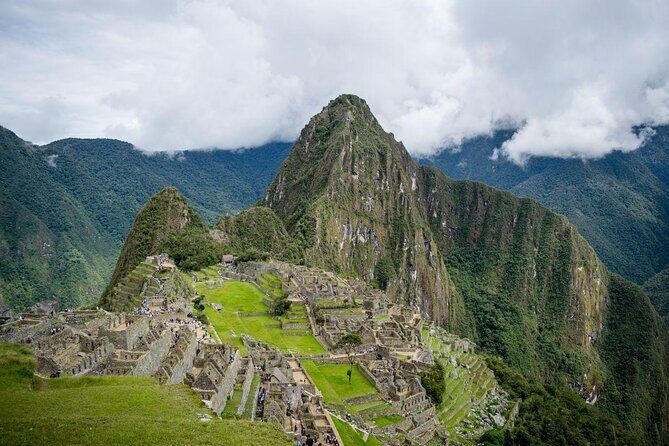
- Machu Picchu with modern entry circuits and a day built around the train + bus flow.
A tour that stitches Peru into one logical story
This kind of trip works best when it’s not just a checklist. The real value here is how the route moves from coastline to highlands, so each day explains the next. Lima shows you Peru’s coastal roots. Paracas and the Nazca area add a different kind of wonder—nature and ancient sky art. Then Arequipa and Colca bring you into volcanic scenery and Andean traditions before you rise again toward Lake Titicaca and Cusco.
One more practical win: the tour includes 11 nights, breakfast each morning (11), and lunch on 5 days, plus the big transfers and most excursions. When your time is tight, that matters more than you’d think. Less time hunting tickets, more time being where you’re supposed to be.
Other multi-day Peru and Machu Picchu tours from Lima
Day 1 in Lima: Miraflores, Huaca Pucllana, and the old center
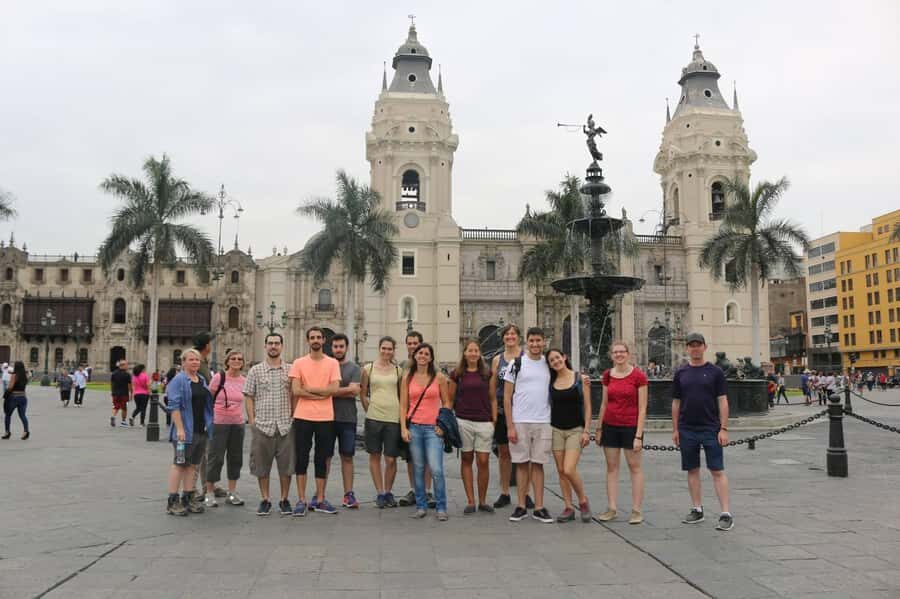
Lima starts with an arrival meet-and-greet and a transfer to your hotel, then a guided afternoon walk that covers the city’s main layers.
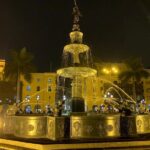
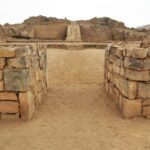
You’ll begin around Miraflores’ Love Park with that Pacific view that helps you understand why Lima grew where it did. From there, you visit Huaca Pucllana, a ceremonial site tied to Lima culture—an early reminder that this isn’t just a modern city.
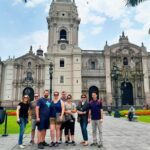
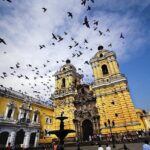
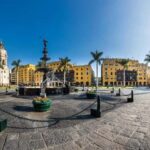
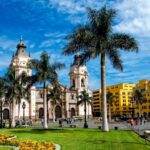
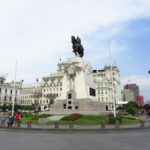
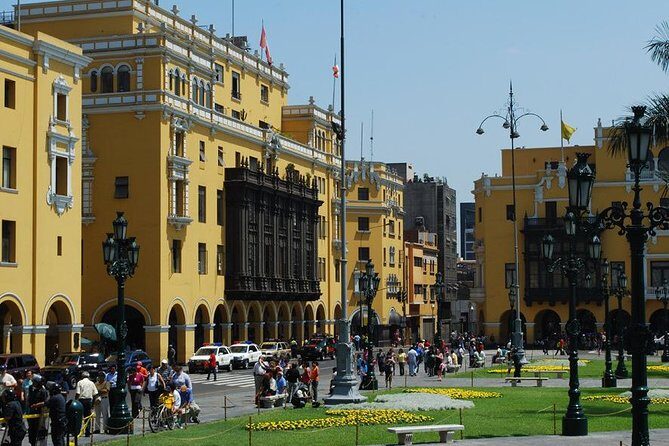
Then it’s into the Centro Histórico around the Main Square, where you’ll see the Government Palace and Town Hall areas, plus the Cathedral. The walk includes Santo Domingo Convent, where corridors linked to San Martín de Porres and Santa Rosa de Lima are described, including where their remains rest. That kind of detail is why a guided city day is worth doing instead of free-wheeling.
Practical tip: Lima can feel busy and spread out. A guided first day helps you avoid that jet-lag fog when you’re figuring out what’s where.
Day 2 Nazca Lines flight: the sky art that only works from above
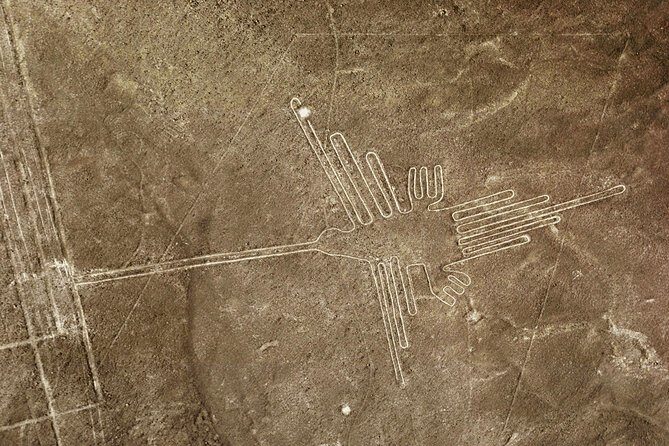
Early on day 2, you take transfers toward Paracas, then move to the airfield for a flight over the Nazca Lines. These huge drawings—animals and insects like a monkey, hummingbird, condor, spider—are hard to grasp from the ground because they were designed for a high viewpoint. That’s the whole point of the flight.
A small technical detail you’ll feel good about: the plane can hold up to 12 passengers. Smaller groups generally mean less waiting and tighter coordination. The overflight is also noted as not recommended for children under 8, which tells you they take safety and comfort seriously.
What to manage in your mind: the Nazca Lines don’t guarantee every element will be equally visible in every condition. Think of it as “best effort in the sky,” not a video-game perfect zoom.
After the flight, the itinerary gives you a free rest of the day to use the hotel facilities around Paracas.
Day 3 Paracas and Ballestas Islands: sea lions, penguins, and the Chandelier
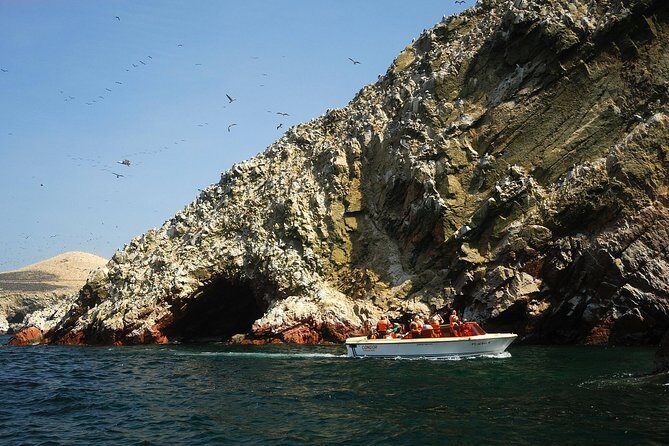
On day 3 you boat out to the Ballestas Islands. Along the way, you’ll also see the Chandelier geoglyph (another Nazca-style figure). That adds an extra “you’re in the right place” moment before you even land on the water.
Once the boat is moving, you’re watching for wildlife: sea lions, pelicans, Humboldt penguins, and other sea birds. The experience is partly nature photography, partly just staring at how close this ecosystem feels from the deck.
Then you transfer back to Lima for an overnight.
Practical consideration: Paracas is more about the water trip than about a full day of built-up attractions. If you’re the type who needs activities every hour, you’ll want to plan your expectations around that.
Day 4 Arequipa: the white city and volcano viewpoints
From Lima you fly to Arequipa (the domestic flight is noted as not included in the price), then you get an afternoon overview of the “white city” highlights.
You’ll see major stops including the San Lazaro colonial district, plus viewpoints like Carmen Alto where you can take in agricultural terraces and volcanoes in the distance: Misti, Chachani, and Pichu-Pichu.
You’ll also visit Yanahuara, known for Andalusian-style church architecture and viewpoints. Santa Catalina Monastery is a big one—often described as a walled-in world within the city, with narrow streets, squares, and gardens that feel like old Spanish quarters.
Finally, you’ll end at the Church of the Society of Jesus (Jesuit-founded) with the San Ignacio Dome. It’s a lot of religious and architectural detail in one day, which is great if you like seeing how a place developed.
Practical tip: Arequipa sits at altitude, too. Even if you feel okay, keep your pace slow the first day.






Days 5 and 6 Colca Canyon: vicuñas, condors, and town churches
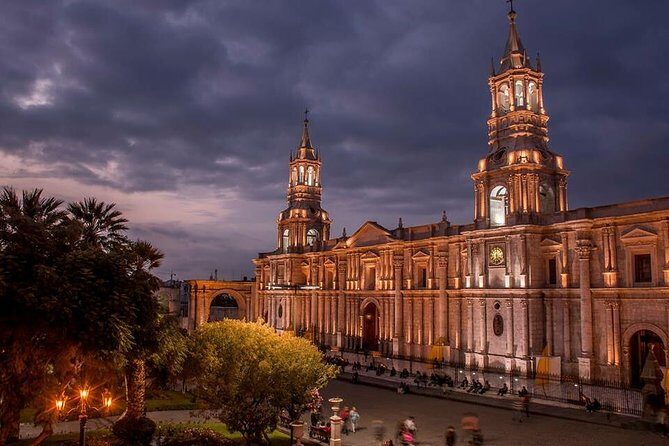
Colca Canyon is where the tour really starts feeling like an Andean adventure. Day 5 heads into the Colca Valley, with stops for scenery and wildlife.
You’ll travel via the foothills of Chachani volcano and pass sights tied to major peaks like Misti and Pichu-Pichu. Then there’s a highlight stop at Pampa Cañahuas, a vicuña reservation where you can see vicuñas running free. The route also passes through small villages, so it’s not just roadside scenery.
Day 5 includes lunch en route, then a free afternoon in the Colca Valley with a mention of optional thermal baths.
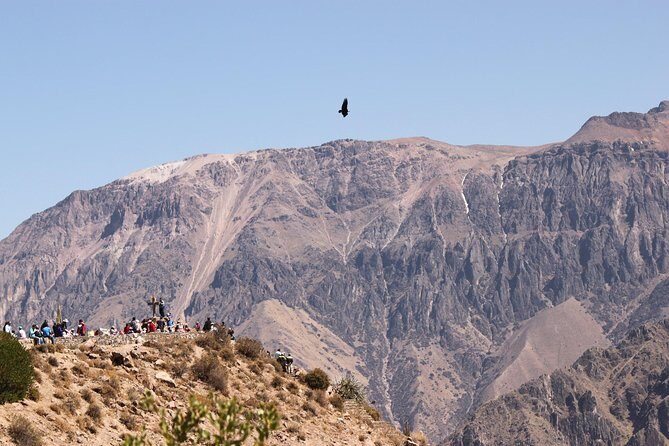
Day 6 starts very early for the Condor Cross viewpoint. This is the moment most people are waiting for: condors soaring at a high observation point. The payoff is the canyon depth—one of those “photos don’t do it justice” views, because the scale is hard to clock until you’re there.
After the condor viewpoint, you visit Maca and Yanque, towns that still keep colonial churches. Then you take a bus toward Puno (about 5 hours).
Practical consideration: Colca is impressive, but early starts are real here. If you hate mornings, you might want to treat Condor Cross as a must-do and accept the cost.
Day 7 Lake Titicaca: Uros totora islands and Taquile’s living traditions
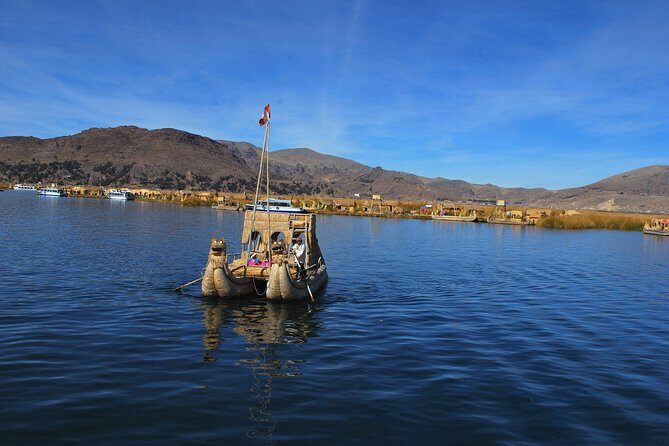
Lake Titicaca days work best when you accept it’s part nature, part culture, and you don’t try to force the “floating islands” idea to match what you imagined. The route visits two very different sides of the lake.
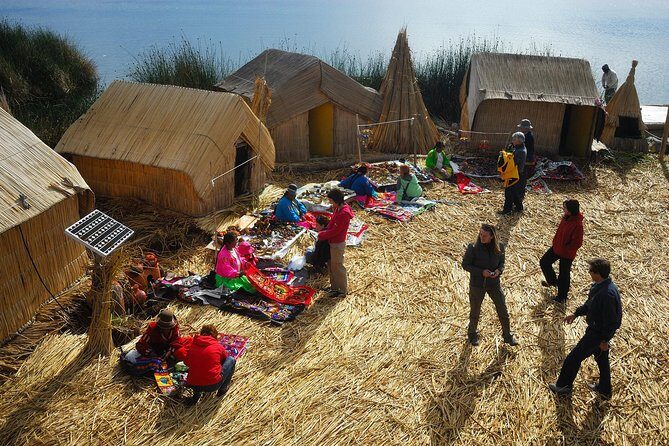
First are the Uros, totora reed islands built and maintained by local communities. Then you go to Taquile, where the settlers maintain ancestral traditions and colorful clothing. Taquile also gives you a strong “view of the lake” moment—especially if weather clears.
You’ll have a typical lunch on Taquile, then return to the city in the afternoon.
Practical tip: you’ll likely feel the cold at altitude on the lake. Packing a warm layer matters more than you think.
Day 8 into Cusco: Pucara ceramics, La Raya border, and Inca temples
Cusco doesn’t appear out of nowhere. Day 8 is a long scenic route that also teaches you how the region ties together.
The bus route includes stops such as:
- Pucara Museum, with a chance to buy bull-shaped ceramics
- La Raya, the natural border between Puno and Cusco
- Racchi, the Temple of Wiracocha
- Andahuaylillas, known for its chapel
You arrive in Cusco late afternoon and stay overnight.
Practical note: this is a “look out the window” day as much as a “get out and walk” day. If you get motion-sick on buses, plan accordingly.
Day 9 Cusco city focus: Sacsayhuamán to Korikancha to the Cathedral
Day 9 starts away from crowds at Sacsayhuamán, a major Inca fortress-like complex with massive stonework and strong panoramic views.
From there, you visit Qenqo, where you’ll see a sacrificial altar embedded in a rock cave. Then it continues to Puca Pucara viewpoint and Tambomachay, noted for impressive architecture tied to Andean worldview.
The afternoon is the classic Cusco “make it real” section:
- San Cristobal Plaza for a panoramic city view
- San Pedro Market to taste local life and products
- Korikancha (the Gold Enclosure) with its gold-covered walls described as its main wow factor
- Santo Domingo Church
- a walking route through places like San Blas, Hatun Rumiyoc, Inca Roca Palace, and the Twelve Angle Stone
- ending back at the Main Square for the Cathedral and colonial masterpieces
Practical tip: this day mixes uneven footing and lots of walking. If you’re even slightly unsure on shoes, wear something with traction.
Day 10 Sacred Valley: Chinchero weaving, Moray terraces, and Ollantaytambo’s precision
Sacred Valley is where you see Inca engineering in daily-world settings.
You start in Chinchero, famous for weaving women. There’s time for textiles work: you’ll stop at a textile center to see old dyeing and spinning methods using alpaca wool. Then you see the Inca plaza and a colonial church there.
Next comes Moray, the Inca site with concentric agricultural terraces that served as a lab for recreating microclimates. This is one of those places where you can look at ruins and still understand how people tested farming conditions.
After lunch, you continue to Ollantaytambo, a “last living village of the Incas.” The visit includes:
- Temple of the ten windows
- Bath of the princess
- Sun Temple
And you’ll have those classic viewpoint moments for photos.
You’ll lodge in the Sacred Valley area.
Practical consideration: day 10 is about time on the road plus several stops. It’s not an easy, lazy day. But it sets you up perfectly for Machu Picchu.
Day 11 Machu Picchu with train + bus: circuits, timing, and the wow factor
This is the day the whole trip is aiming at: Machu Picchu.
You board at Ollantaytambo station for the train to the Machu Picchu station, then you’re assisted to board the bus up a winding road with views over the Urubamba River, a canyon-shaped backdrop that makes the site feel even more remote.
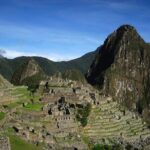
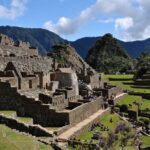
At Machu Picchu, you visit terraces, staircases, ceremonial areas, and urban zones—the “whole city in miniature” feeling you’ve seen in photos but still struggle to fully believe until you’re standing there.
Lunch is included, and then you return by train and transfer back to your hotel in Cusco.
Two details matter for how your visit feels:
1) Machu Picchu uses new visitor circuits with three main routes. The itinerary states route 2 will be prioritized, and if it’s not available you might get circuit 3B or circuit 1B, with you confirming choices before tickets are issued.
2) The Machu Picchu ticket is not refundable, and date changes aren’t accepted—you’d need a new entrance ticket.
Practical tip: don’t treat this day like a flexible “we’ll see when we arrive” plan. Build your day around the assigned circuit and the transport timing.
Day 12 wrap-up: departure transfer from the Cusco side
Day 12 is straightforward: departure transfer. By this point, you’ve seen coast, desert sky art, volcanic cities, highland canyon views, lake culture, and the Inca core around Cusco and Machu Picchu.
The main practical thing to manage is what’s not included: a domestic flight Cusco–Lima is specifically listed as not included. If you need that flight to connect to international travel, plan it early and line it up with your return needs.
Price and logistics: what your $2,361 is really buying
At $2,361 per person, you’re paying for a lot of structure: 11 nights, breakfast every morning, multiple lunches, nearly all tours and excursions, and transfers between airports, hotels, railway, and bus stations. There’s also the Lima–Paracas–Lima bus ticket included.
What you should factor in:
- Cusco to Lima domestic flight is not included, so your final total could rise depending on current fares.
- Nazca airport tax is not included (listed as $14 per person).
- Machu Picchu entry is included, but the ticket rules are strict on date changes.
So is it good value? For many people, yes—because the “cost” of a complex trip isn’t just money. It’s time, coordination, and the stress of making multiple connections across different regions at altitude. This tour is designed to remove most of that friction, and the small max group size (12 travelers) suggests you won’t be lost in a mega-bus crowd.
Should you book this Peru route?
Book it if you want a guided, stress-reduced overview of Peru’s major regions in 12 days, and you’re okay with early mornings and a bit of altitude pressure. It’s especially a strong fit if you value having someone handle transfers, entry timing, and guided context at each stop.
Consider other options if:
- you want a slower pace with more free days to explore independently,
- you’re sensitive to altitude and haven’t planned for it,
- or you hate fixed schedules (Machu Picchu timing and circuits are not flexible).
If you do book, my best practical advice is simple: pack for cold mornings in the Andes, take altitude seriously, and treat Nazca and wildlife sightings as “conditions apply,” not guaranteed perfection. When you do that, this itinerary delivers exactly what it promises—coast to highlands, with the big names done well.
FAQ
What’s included in the tour price?
The tour includes all transfers from/to airports, hotels, railway and bus stations, tours and excursions listed in the program, the Lima–Paracas–Lima bus ticket, 11 nights of accommodation, breakfast (11), and lunch (5).
Are the domestic flights included?
The domestic flight ticket Cusco to Lima is not included. The Arequipa hop is mentioned as a flight, but the only explicitly excluded domestic flight in the details is Cusco to Lima.
Is the Nazca Lines flight included?
Yes, the Nazca Lines overflight is included as part of the Nazca day, though the Nazca airport tax is not included (listed as $14 per person).
How does Machu Picchu work with entry circuits?
Machu Picchu uses new visitor circuits with three main routes. The plan gives priority to circuit route 2; if it isn’t available, you’ll be informed about circuit 3B or circuit 1B options before tickets are issued. The ticket is not refundable, and date changes/amendments aren’t accepted.
What about altitude sickness?
Altitude sickness is flagged as a concern. You’re advised to bring medicine or ask your doctor for advice before you depart if you’re prone to altitude issues.
Can I cancel for a full refund?
Yes. You can cancel up to 24 hours in advance of the experience start time for a full refund.